Total Pageviews

2009/11/20

Sunday before Advent

The Sunday next before Advent 
Homily of Augustine on Psalm CXLIX
Home, Sunday before Advent

STIR up, we beseech thee, O Lord, the wills of thy faithful people; that they, plenteously bringing forth the fruit of good works, may by thee be plenteously rewarded; through Jesus Christ our Lord. Amen.

Source of Collect: Sacramentary of Gregory of Rome [c. 600]. The title of this collect "The Sunday next before Advent" was that which was used in the Sarum Missal, and was restored to the American Prayerbook in 1892. [Barbee and Zahl]

Jeremiah xxiii, Psalm 149 &  St. John vi. 1 
Homily of Augustine on Psalm CXLIX

Genter Altar, Altar des Mystischen Lammes, obere mittlere Haupttafel, Szene: Thronender Gottvater, Eyck, Hubert van 

I will raise unto David a righteous Branch, and a King shall reign
* 
Let the children of Zion be joyful in their King


Comment

 
This Sunday many churches will observe the feast of Christ the King, and today the appointed OT lesson from Jeremiah promises a King for Israel from the branch of David, as well as the psalm featured for this day.  Augustine, in his homily on Psalm 149 preached.
 
"Let Israel rejoice in Him who made Him". What is, "Israel"? "Seeing God." He who seeth God, rejoiceth in Him by whom he was made. What is it then, brethren? we have said that we belong to the Church of the saints: do we already see God? and how are we Israel, if we see not? There is one kind of sight belonging to this present time; there will be another belonging to the time hereafter: the sight which now is, is by faith; the sight which is to be will be in reality. If we believe, we see; if we love, we see: see what? God. Ask John: "God is love;"  let us bless His holy Name, and rejoice in God by rejoicing in love. Whoso hath love, why send we him afar to see God? Let him regard his own conscience, and there he seeth God...."And let the sons of Sion exult in their King." The sons of the Church are Israel. For Sion indeed was one city, which fell: amid its ruins certain saints dwelt after the flesh: but the true Sion, the true Jerusalem (for Sion and Jerusalem are one), is "eternal in the heavens,"  and is "our mother."  She it is that hath given us birth, she is the Church of the saints, she hath nourished us, she, who is in part a pilgrim, in part abiding in the heavens. In the part which abideth in heaven is the bliss of angels, in the part which wandereth in this world is the hope of the righteous. Of the former is said, "Glory to God in the highest;" of the latter, "and on earth peace to men of good will."  Let those then who, being in this life, groan, and long for their country, run by love, not by bodily feet; let them seek not ships but wings, let them lay hold on the two wings of love. What are the two wings of love? The love of God, and of our neighbour. For now we are pilgrims, we sigh, we groan. There has come to us a letter from our country: we read it to you. "And the sons of Sion shall exult in their King." The Son of God, who made us, was made one of us: and He rules us as our King, because He is our Creator, who made us. But He by whom we were made is the same as He by whom we are ruled, and we are Christians because He is Christ. He is called Christ from Chrism, that is, Anointing....Give to the Priest somewhat to offer. What could man find which he could give as a clean victim? What victim? what clean thing can a sinner offer? O unrighteous, O sinful man, whatever thou offerest is unclean, and somewhat that is clean must be offered for thee....Let then the Priest that is clean offer Himself, and cleanse thee. This is what Christ did. He found in man nothing clean for Him to offer for man: He offered Himself as a clean Victim. Happy Victim, true Victim, spotless Offering. He offered not then what we gave Him; yea rather, He offered what He took of us, and offered it clean. For of us He took flesh, and this He offered. But where took He it? In the womb of the Virgin Mary, that He might offer it clean for us unclean. He is our King, He is our Priest, in Him let us rejoice. 

 
When Pilate questioned our Lord, Jesus said, My Kingdom is not of this world. Indeed, he rules in the hearts of his elect at the right hand of his Father in heaven until he shall come again and put all in all under his reign and defeat all that is evil. He is the High Priest, Prophet, and King.
 
There is a regal song based on that Angelic hymn in Luke that the saints of the early church sang: let us join our voices with theirs this day in praise of King Jesus the Christ:
 
Glory be to God on high
And on earth peace, goodwill towards men,
We praise thee, we bless thee,
we worship thee, we glorify thee,
we give thanks to thee, for thy great glory
O Lord God, heavenly King,
God the Father Almighty.
O Lord, the only-begotten Son Jesu Christ;
O Lord God, Lamb of God, Son of the Father,
that takest away the sins of the world,
have mercy upon us.
Thou that takest away the sins of the world,
have mercy upon us.
Thou that takest away the sins of the world,
receive our prayer.
Thou that sittest at the right hand of God the Father,
have mercy upon us.
For thou only art holy;
thou only art the Lord;
thou only, O Christ,
art most high
in the glory of God the Father.
Amen.
[Hilary of Pointers c 360]
 
Finis


--
Released by Primus Pilus
Legio Christi-Ecclesia Militans
"Let us therefore follow after the things which make for peace, and things wherewith one may edify another" [St. Paul's Epistle to the Romans 14:19]

* ORDO CENTURIONUM * IN HOC SIGNO VINCES * TIME DEUM ET OPERARE IUSTITIAM
 

2009/11/14

The Twenty-third Sunday after Trinity


Augustine on Psalm CXXVIII 
Home for the Twenty-third Sunday after Trinity

O GOD, our refuge and strength, who art the author of all godliness; Be ready, we beseech thee, to hear the devout prayers of thy Church; and grant that those things which we ask faithfully we may obtain effectually; through Jesus Christ our Lord. Amen.

Source: Bishop Gregory of Rome [604 AD] Compare Psalm 46 God is our refuge and strength, a very present help [Barbee and Zahl]. The petition reminds one of Jesus' promise, 21:22 And all things, whatsoever ye shall ask in prayer, believing, ye shall receive.

Philippians iii. 17, Psalm cxxvii,  &  St. Matthew xxii. 15 
Homily of Augustine on Psalm CXXVIII

Blessed are all they who fear the Lord, Who walk in his ways.

Comment:

Augustine's homily is on Psalm 128 today (127 OSB and Latin), and he interprets the psalm in the light of Christ and the Church.  The psalm opens with "Blessed are all who fear the Lord, who walk in his ways."  

My thought turn to a friend and Christian warrior this day who epitomized this verse. He passed away on Veteran's Day morning.   He was one who "feared the Lord" and he always endeavored to "walk in his ways". He had a faith that was strong and deep. In thinking on him now, and his destiny, the words of our Lord came to mind when he said, "I am the resurrection, and the life: he that believeth in me, though he were dead, yet shall he live". That was his hope, and it is our too.  

Augustine wrote,

For, "if in this life only," saith the Apostle, "we have hope in Christ, we are of all men most miserable." For what reason were the Martyrs condemned to beasts? What is that good? Can it be declared? by what means, or what tongue can tell it? or what ears can hear it? That indeed, "Neither ear hath heard, nor hath it entered into man's heart:"  only let us love, only let us grow in grace: ye see, then, that battles are not wanting, and that we fight with our lusts. We fight outwardly with unbelieving and disobedient men; we fight inwardly with carnal suggestions and perturbations: we everywhere as yet fight....What sort of peace then is this? One from Jerusalem, for Jerusalem is interpreted, A vision of Peace. Thus then "mayest thou see the good things that are of Jerusalem," and that, "all thy life long--and mayest thou see," not only thy children, but, "thy children's children." What meaneth, Thy children? Thy works which thou here dost. Who are thy children's children? The fruits of thy works. Thou givest alms: these are thy children: for the sake of thine alms thou receivest everlasting life, these are thy children's children. "Mayest thou see thy children's children;" and there shall be "peace upon Israel" .... 

Do you have this hope and this assurance? I pray so and think of this old hymn:

  1. Blessed assurance, Jesus is mine!
    Oh, what a foretaste of glory divine!
    Heir of salvation, purchase of God,
    Born of His Spirit, washed in His blood.
    • Refrain:
      This is my story, this is my song,
      Praising my Savior all the day long;
      This is my story, this is my song,
      Praising my Savior all the day long.
  2. Perfect submission, perfect delight,
    Visions of rapture now burst on my sight;
    Angels, descending, bring from above
    Echoes of mercy, whispers of love.
  3. Perfect submission, all is at rest,
    I in my Savior am happy and blest,
    Watching and waiting, looking above,
    Filled with His goodness, lost in His love.
  4. [1873 Francis J Crosby]

Finis
__________________________________ 
--
Released by Primus Pilus
Legio Christi-Ecclesia Militans
"Let us therefore follow after the things which make for peace, and things wherewith one may edify another" [St. Paul's Epistle to the Romans 14:19]

* ORDO CENTURIONUM * IN HOC SIGNO VINCES * TIME DEUM ET OPERARE IUSTITIAM

2009/11/06

The Twenty-second Sunday after Trinity


Augustine on Psalm 125
Home, 22nd Sunday after Trinity 

LORD, we beseech thee to keep thy household the Church in continual godliness; that through thy protection it may be free from all adversities, and devoutly given to serve thee in good works, to the glory of thy Name; through Jesus Christ our Lord. Amen.

Source: Sacramentary of Bishop Gregory of Rome [604 AD] The Latin used the word familia, which points to the traditional Roman family that was the basic and most important element of society. It included all in the household, including slaves, and was headed by the pater familias who was responsible for the welfare of all. This concept of the household is the basis of the Gospel story today.

Psalm: 123, 124, 125, 136, 138;   Philippians i. 3   &  St. Matthew xviii. 21 
Homily of Augustine on Psalm CXXV

As for such as turn aside unto their crooked ways, the LORD
shall lead them forth with the workers of iniquity: but peace shall be
upon Israel.


This week we consider the homily of Augustine on Psalm 125. I encourage all 
to read it. In one paragraph he considers the Christian Roman soldiers who served under the apostate Julian, those martyrs who refused to sacrifice to the idols, but who never waived at the evil emperor's commands to defend the state. We may look more closely at that and other parts of the homily another day, but today I would like to direct your focus to the verse above, and Augustine's treatment of it following:

Whence the Psalmist at once addeth: "As for such as turn aside, the Lord shall lead them forth unto strangling with the workers of unrighteousness" : that is, those whose deeds they have imitated; because they took delight in their present pleasures, and did not believe in their punishments to come. What then shall they have, who are righteous in heart, and who turn not back? Let us now come to the heritage itself, brethren, for we are sons. What shall we possess? What is our heritage? what is our country: what is it called? Peace. In this we salute you, this we announce to you, this the mountains receive, and the little hills receive as righteousness.  Peace is Christ: "for He is our peace, who hath made both one, and hath broken down the middle wall of partition between us." Since we are sons, we shall have an inheritance. And what shall this inheritance be called, but peace? And consider that they who love not peace are disinherited. Now they who divide unity, love not peace. Peace is the possession of the pious, the possession of heirs. And who are heirs? Sons....Since then Christ the Son of God is peace, He therefore came to gather together His own, and to separate them from the wicked. From what wicked men? From those who hate Jerusalem, who hate peace, who wish to tear unity asunder, who believe not peace, who preach a false peace to the people, and have it not. To whom answer is made, when they say, "Peace be with you," "And with thy spirit:" but they speak falsely, and they hear falsely. Unto whom do they say, Peace be with you? To those whom they separate from the peace of the whole earth. And unto whom is it said, "And with thy spirit"? To those who embrace dissensions, and who hate peace. For if peace were in their spirit, would they not love unity, and leave dissensions? Speaking then false words, they hear false words. Let us speak true words, and hear true words. Let us be Israel, and let us embrace peace; for Jerusalem is a vision of peace, and we are Israel, "and peace is upon Israel." 

These are strenthening and comforting words for God's household, as the collect of the day uses the term from the Latin familia as used by Gregory and those before him. Comforting to us "for we are sons" , but they are only so comforting as the knowledge and assurance that we are truly of his household.  Few of us know the hour or day of our death, and so we must watch, pray, and be always vigilant in our practice of faith, duty, and love of Christ. 

Augstine then addresses the heretics of his day who are not of the familia. Our churches these days have their share of hertics who have given up any pretension of ortodoxy, but still play the clerk and say, "Peace be with you.", to many blind sheep who parrot back, "and also with you", but they know no peace for they deny Jesus as Savior. Just as Augustine points out, they speak falsely, and their minions hear falsely.  Let us follow Augustine's advice and speak true words, words of the orthodox and catholic faith since the beginning of the apostolic church.

God's Peace be with his saints, now and evermore.

Finis
--
Released by Primus Pilus
Legio Christi-Ecclesia Militans
"Let us therefore follow after the things which make for peace, and things wherewith one may edify another" [St. Paul's Epistle to the Romans 14:19]

* ORDO CENTURIONUM * IN HOC SIGNO VINCES * TIME DEUM ET OPERARE IUSTITIAM
2009/10/30

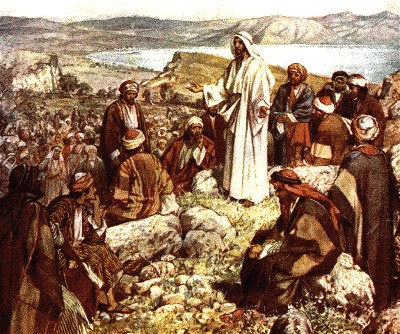
All Saints Sunday

O ALMIGHTY God, who hast knit together thine elect in one communion and fellowship, in the mystical body of thy Son Christ our Lord; Grant us grace so to follow thy blessed Saints in all virtuous and godly living, that we may come to those unspeakable joys which thou hast prepared for those who unfeignedly love thee; through the same thy Son Jesus Christ our Lord. Amen. 


Revelation vii. 2   &   St. Matthew v. 1 
Homilies 
Hymn: For All the Saints

Rejoice, and be exceeding glad: for great is your reward in heaven


" In today's homily, Augustine wrote, 

"Blessed are the pure in heart: for they shall see God." How foolish, therefore, are those who seek God with these outward eyes, since He is seen with the heart! as it is written elsewhere, "And in singleness of heart seek Him." For that is a pure heart which is a single heart: and just as this light cannot be seen, except with pure eyes; so neither is God seen, unless that is pure by which He can be seen. 

Jesus taught that God indeed marks those sacrifices his elect make day by day in following his prime directive, and they who are his own; who are pure of heart, will see the face of God. So then there are two things here, those that are unseen, such as the pure heart, the meek (not weak, but rather not puffed up with themselves), those whose spirits are distressed at the fallen state of the world and their own failings, and those who spirits thirst for the truths of the Gospel. These are the things internal and not seen by man, but known by God. On the other hand, our Lord made a specific point in emphasizing things that are quite visible. Men who love their neighbors practice mercy and are peacemakers. So we see that the blessed are those who put the Lord's Summary of the Law into practice by walking humbly before God for whom they have unfeigned love, and by working out his command to love their neighbor by acts of mercy and peace. 

Some often wonder, "Will I go to heaven, will I be a saint?"  God knows, and those who are heaven bound are his saints already. Those who can readily identify with the attributes described in the beatitudes may have confidence that they will be in that number.

Finally, in the sermon, Jesus but turned to his disciples and promised them they would face persecution for their faith in him, but that their reward would be great.  The first "saint" of the church whose day of martydom was celebrated annually was Bishop Polycarp in about 155 AD. When asked to deny Christ he said,  "Eighty-six years I have served Christ, and He never did me any wrong. How can I blaspheme my King who saved me?"  I pray that each of you are prepared to say the same if that day come, and to meekly withstand persecution from an ever more aggressive and belligerent world, overcoming evil with good.  As our collect today says, 
 Grant us grace so to follow thy blessed Saints in all virtuous and godly living

From all Thy saints in warfare, for all Thy saints at rest,


Finis
--
Released by Primus Pilus
Legio Christi-Ecclesia Militans
"Let us therefore follow after the things which make for peace, and things wherewith one may edify another" [St. Paul's Epistle to the Romans 14:19]

* ORDO CENTURIONUM * IN HOC SIGNO VINCES * TIME DEUM ET OPERARE IUSTITIAM

2009/10/23

The Twentieth Sunday after Trinity


Augustine homily on Matt. xxii 
Home, 20th Sunday after Trinity

O ALMIGHTY and most merciful God, of thy bountiful goodness keep us, we beseech thee, from all things that may hurt us; that we, being ready both in body and soul, may cheerfully accomplish those things which thou commandest; through Jesus Christ our Lord. Amen.

Source: Sacrementary of Bishop Gelasius of Rome [494]. Much minor reworking from the Latin. [Barbee and Zalh]

Ephesians v. 15 &  St. Matthew xxii. 1 
Augustine on Matt. xx etc.

how camest thou in hither not having a wedding-garment 


Comment

Today's Gospel is addressed in the homily of Augustine. I enjoyed the entire homily and invite you to read it at the link. I would like to examine closely this section 

 What is that "wedding garment" then? This is the wedding garment: "Now the end of the commandment," says the Apostle, "is charity out of a pure heart, and of a good conscience, and of faith unfeigned."  This is "the wedding garment." Not charity of any kind whatever; for very often they who are partakers together of an evil conscience seem to love one another. They who commit robberies together, who love the hurtful arts of sorceries, and the stage together, who join together in the shout of the chariot race, or the wild beast fight; these very often love one another; but in these there is no "charity out of a pure heart, and of a good conscience, and of faith unfeigned. The wedding garment" is such charity as this. "Though I speak with the tongues of men and of Angels, and have not charity, I am become as sounding brass, and a tinkling cymbal."  ... This then is "the wedding garment." Question yourselves; if ye have it, ye may be without fear in the Feast of the Lord. In one and the same man there exist two things, charity and desire. Let charity be born in thee, if it be yet unborn, and if it be born, be it nourished, fostered, increased. But as to that desire, though in this life it cannot be utterly extinguished; "for if we say that we have no sin we deceive ourselves, and the truth is not in us;"  but in so far as desire is in us, so far we are not without sin: let charity increase, desire decrease; that the one, that is, charity, may one day be perfected, and desire be consumed. Put on "the wedding garment:" you I address, who as yet have it not. Ye are already within, already do ye approach to the Feast, and still have ye not yet the garment to do honour to the Bridegroom; "Ye are yet seeking your own things, not the things which are Jesus Christ's." [3013] For "the wedding garment" is taken in honour of the union, the union, that is, of the Bridegroom to the Bride. Ye know the Bridegroom; it is Christ. Ye know the Bride; it is the Church. Pay honour to the Bride, pay honour to the Bridegroom. If ye pay due honour to them both, ye will be their children. Therefore in this make progress. Love the Lord, and so learn to love yourselves; that when by loving the Lord ye shall have loved yourselves, ye may securely love your neighbour as yourselves. For when I find a man that does not love himself, how shall I commit his neighbour whom he should love as himself to him? And who is there, you will say, who does not love himself? Who is there? See, "He that loveth iniquity hateth his own soul." Does he love himself, who loves his body, and hates his soul to his own hurt, to the hurt of both his body and soul? And who loves his own soul? He that loveth God with all his heart and with all his mind. To such an one I would at once entrust his neighbour. "Love your neighbour as yourselves." 

Twenty-one years ago in an Ethics class as Syracuse, I wrote a paper that keyed on the idea of the Summary of the Law as a guide to ethical behavior and submitted it to my professed "secular humanist" professor. My theme was close to that of Augustine in the above paragraph that I have emphasized: "Love the Lord, and love your neighbor  (as well) as yourself.  I had all these years thought my twist on the Summary and theme was original, but in reading Augustine this week, I realize that this fits within the adage that "there is nothing new under the sun". 

 I don't personally agree with Augustinie on the nature of the wedding garment, and think it to be a "saving faith by election", but I firmly support his thesis that we are sinners and saints who are called to grow in the spiritual virtues, the chief of which is charity toward our neighbors. As we recognize within ourselves that we are living in charity, and resisting malice, with every "neighbor", we may discern God's work within us, changing us into the image of Christ, to the glory of God.  For those who recognize such in their lives comes the blessed assurance of salvation confirmed, but to those whose malevolent spirit finds no love of self or neighbor, no rest, and where sin rules, then the terror of damnation leads to separation, wretchedness, desperation, and despair.  Chapter 13 of 1st Corinthians calls us from the beginnings of our walk in faith to the fruition and proof of that faith in charity manifested.

This coming week we will induct new members into the Labarum Guard on the eve of the Feast of Saxa Ruba, 27 October. All guards are called upon to pray this prayer that recognizes the source of those ancient and spritual virtues:  

I bid your prayers for them and all of us this day, Let us pray:

Almighty God, Captain of the Host, inspire us, we beseech thee, to grow in the virtues of justice, wisdom, courage, moderation, faith, hope, and charity; to protect and defend thy Church Militant against every assault of the enemy; and to render unto thee our Christian service; through Jesus Christ our Lord, who liveth and reigneth with thee and the Holy Ghost, one God, for ever and ever. Amen
"If a man loves righteousness, her labours are virtues; for she teacheth temperance and prudence, justice and fortitude, which are such things as man can have nothing more profitable in their life." (Wisdom of Solomon 8:7) "And now abideth faith, hope, charity, these three; but the greatest of these is charity" (1 Corenthians 13:13) 
Finis

--
Released by Primus Pilus
Legio Christi-Ecclesia Militans
"Let us therefore follow after the things which make for peace, and things wherewith one may edify another" [St. Paul's Epistle to the Romans 14:19]

* ORDO CENTURIONUM * IN HOC SIGNO VINCES * TIME DEUM ET OPERARE IUSTITIAM
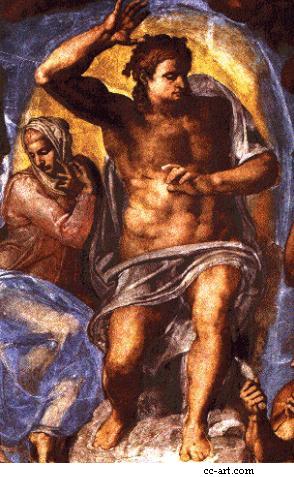
2009/10/17

Saint Luke the Evangelist [18 Oct] Trinity 19


Augustine on Luke x. 16
Being that portion of the Gospel that follows the regularly appiointed verses for the Feast of St. Luke [Luke x 1]

ALMIGHTY God, who didst inspire thy servant Saint Luke the Physician, to set forth in the Gospel the love and healing power of thy Son; Manifest in thy Church the like power and love, to the healing of our bodies and our souls; through the same thy Son Jesus Christ our Lord. Amen.

O GOD, forasmuch as without thee we are not able to please thee; Mercifully grant that thy Holy Spirit may in all things direct and rule our hearts; through Jesus Christ our Lord. Amen.


Sirach xxxviii,, Psalm 103  , 2 Timothy iv. 5   &   St. Luke x. 8
Homily of Augustine

He that heareth you heareth me; and he that despiseth you despiseth me;
 and he that despiseth me despiseth him that sent me.


Comment

This day the Church remembers Luke the Evangelist - a Physician by tradition. The Early Church had a prologue to the Gospel that said, 

Luke, a native of Antioch, by profession a physician. He had become a disciple of the apostle Paul and later followed Paul until his [Paul's] martyrdom. Having served the Lord continuously, unmarried and without children, filled with the Holy Spirit he died at the age of 84 years

 
For the OT lesson today, I have selected verses from the 38th chapter of Sirach.  We have many members who are in the field of medicine and healthcare, and on this day we recognize them for their service.  I encourage you to read this most appropriate scriptture, and to praise God who is with our centurions as they practice their art and science to his glory.

Our homily today is from Augustine. It addsresses the verses that follow the regular Gospel of Luke x, 1ff on the sending forth of the 70. The lesson of the 70 was likely selected in the years gone by because another tradition of the Early Church held that Luke was one of the 70. In the portion that follows the regular reading, Jesus advises his disciples of the fate of those who reject them and their teaching.  You won't often hear that message repeated in the post-modern "churches" as they would be afraid of offending their members. I am not ashamed of the Gospel, and I do not for an instant believe that the Gospels present anything but the true Word of God. I especially am thankful and praise God for the witness of Luke and his history of the ministry of our Lord and the Acts of the Apostles.


Let us turn now hear a portion of the message of Augustine [Homily of Augustine]

What our Lord Jesus Crist at that time spake to His disciples was put in writing, and prepared for us to hear. And so we have heard His words. For what profit would it be to us if He were seen, and were not heard? And now it is no hurt, that He is not seen, and yet is heard. He saith then, "He that despiseth you, despiseth Me."  If to the Apostles only He said, "He that despiseth you, despiseth Me;" do ye despise us. But if His word reach to us, and He hath called us, and set us in their place, see that ye despise not us, lest the wrong ye shall do unto us reach to Him. For if ye fear not us, fear Him who said, "He that despiseth you, despiseth Me." But why do we, who are unwilling to be despised by you, speak to you, except that we may have joy of your good conversation? Let your good works be the solace of our perils. Live well, that ye may not die ill. 
 
We know the truth of Augstine's words. Those who have been called and speak in our Lord's name are despised by those who are offended in the Gospel. His true ministers suffer for his sake, and yet they will receive the good reward promised by our Lord. Knowing this, true servants of God continue to proclaim the Gospel as best they can and as they have recievd and believe it. However, those who pretend to be God's ministers, dress in their pomp, and yet pander the idolators, pagans, and reprobate, while withholding the teachings of our Lord as given below, will win the admiration and praise of these lost souls, and they also shall have their desired reward in that day.  They will despise you for your orthodox faith. What shall become of them? What saith scripture:

...be ye sure of this, that the kingdom of God is come nigh unto you. But I say unto you, that it shall be more tolerable in that day for Sodom, than for that city. Woe unto thee, Chorazin! woe unto thee, Bethsaida! for if the mighty works had been done in Tyre and Sidon, which have been done in you, they had a great while ago repented, sitting in sackcloth and ashes. But it shall be more tolerable for Tyre and Sidon at the judgment, than for you. And thou, Capernaum, which art exalted to heaven, shalt be thrust down to hell. He that heareth you heareth me; and he that despiseth you despiseth me; and he that despiseth me despiseth him that sent me.


finis

Released by Primus Pilus
Legio Christi-Ecclesia Militans
"Let us therefore follow after the things which make for peace, and things wherewith one may edify another" [St. Paul's Epistle to the Romans 14:19]

* ORDO CENTURIONUM * IN HOC SIGNO VINCES * TIME DEUM ET OPERARE IUSTITIAM
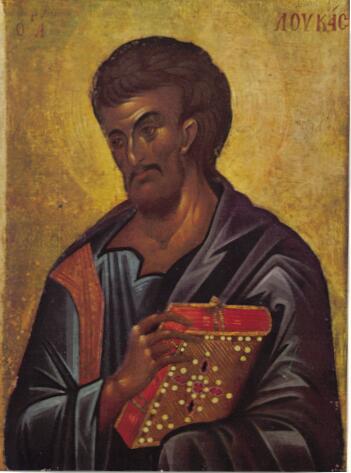
2009/10/10

The Eighteenth Sunday after Trinity


Augustine on Psalm CXII

Trinity 18 Home

LORD, we beseech thee, grant thy people grace to withstand the devil; and with pure hearts and minds to follow thee, the only God; through Jesus Christ our Lord. Amen.

Source Bishop Gelasians Sacrmentary [494] where appointed for the Sunday before Ember Days in the Autumn. Ember days were for penitence, fasting, and the Saturday for ordinations in Rome. The 1662 added temptations of the world, the flesh One is reminded of the Lord's prayer and of 2 Peter 2:9

Psalm 112, Ephesians iv. 1   &   St. Luke xiv. 1 
Homily - Psalm CXII by Augustine

Comment

A couple of years ago I watched the movie "300" : the 300 Spartans and supporting troops under Leonidas who held off an invading Persian army for a considerable period under Xerxes against amazing odds - long enough for the Greek city states to rally. [http://en.wikipedia.org/wiki/Battle_of_Thermopylae]

This day the counter on the registration for the Order hit 300. The Legio Christi now has three centuries of Christ's own who vowed to "fear God and do what is right". They represent 300 building blocks on the foundation of the everlasting and true Church of Jesus Christ. The task to defend the Church seems overwhelming, but like Leonidas and his Spartans, you stand in the breach to defend the faith once given in an historic era. So, stand firm in faith, and pray our work in this battle may be of the kind that endures like gold, rather than is burned like stubble [1 Cor 3:11]

In today's homily by Augustine on Psalm 118, he opens with this: 


 I believe, brethren, that ye remarked and committed to memory the title of this Psalm. "The conversion," he saith, "of Haggai and Zechariah." These prophets were not as yet in existence, when these verses were sung.  ...But both, the one within a year after the other, began to prophesy that which seemeth to pertain to the restoration of the temple, as was foretold so long before.  ..."For the temple of God is holy, which temple ye are." Whoever therefore converteth himself to the work of this building together, and to the hope of a firm and holy edifice, like a living stone from the miserable ruin of this world, understandeth the title of the Psalm, understandeth "the conversion of Haggai and Zechariah." Let him therefore chant the following verses, not so much with the voice of his tongue as of his life. For the completion of the building will be that ineffable peace of wisdom, the "beginning" of which is the "fear of the Lord:" let him therefore, whom this conversion buildeth together, begin thence. 

Do you see how he calls those he addresses in his cathedral "bretheren".  He speaks of he "restoration of the temple"  He regards them to be co-laborers in continuing to build the True Church. He has identified the root of any successful building: before anything else, it is necessary that the laborers have a right "fear of the Lord".  O how many are there who do labor in vain because they know not God. They pursue their ideas of justice and peace, and yet forsake, yes and even deny,  the living God. How quickly their work will be thrown down and burnt in the last days.  Because they regard not the works of the LORD, nor the operation of his hands, he shall destroy them, and not build them up. [Ps 28:5]. Centurions, be careful. Ensure that in all matters you regard the Lord rightly as your Sovereign, and commit your work always to his glory. 

Finis
-- 
Released by Primus Pilus
Legio Christi-Ecclesia Militans
"Let us therefore follow after the things which make for peace, and things wherewith one may edify another" [St. Paul's Epistle to the Romans 14:19]

* ORDO CENTURIONUM * IN HOC SIGNO VINCES * TIME DEUM ET OPERARE IUSTITIAM

2009/10/03

The Seventeenth Sunday after Trinity

 
Augustine on Psalm 91
Trinity 17 Home

LORD, we pray thee that thy grace may always prevent and follow us, and make us continually to be given to all good works; through Jesus Christ our Lord. Amen.

Source: Bishop Gregory [595]. "Prevent" meaning to come before from the verb prevenient. This calls to my mind Patrick's Breastplate Christ behind me, Christ before me... and Psalm 139 Thou hast beset me before and behind...

Deuteronomy xvi.8; Psalm 91, Ephesians iv. 1   &   St. Luke xiv. 1
Homily - Psalm XCI by Augustine

Comment

This week we look at Augustine on psalm 91. I very much enjoyed his homily and commend it all.  This past week a centurion sent me a little story about a soldier that reported in to heaven, and admitted that he had not been special here on earth. God received the soldier into heaven, hence, one of the saints,  because of his fidelity and execution of duty.

I pondered this little story and the approach of All Saints Day which falls on a Sunday this year, and I responded to our brother, and affirmed the theology of St. Paul. This is one of many quotes that seems to apply to the saints: 

The eyes of your understanding being enlightened; that ye may know what is the hope of his calling, and what the riches of the glory of his inheritance in the saints [Eph 1:18]

By happenstance, Augustine has addressed this subject in his examination of the psalm and this verse below:

Because thou hast made the LORD, which is my refuge, even the most High, thy habitation; 
 There shall no evil befall thee, neither shall any plague come nigh thy dwelling.

 He has now come to the power Which rescues him from falling by the "downfall and the devil of the noon-day." "For Thou, Lord, art my hope: Thou hast set Thy house of defence very high." What do the words "very high" mean? For many make their house of defence in God a mere refuge from temporal persecution; but the defence of God is on high, and very secret, whither thou mayest fly from the wrath to come. Within "Thou hast set thine house of defence very high. There shall no evil happen unto Thee: neither shall any plague come nigh Thy dwelling"  The Holy City is not the Church of this country only, but of the whole world as well: not that of this age only, but from Abel himself down to those who shall to the end be born and believe in Christ, the whole assembly of the Saints, belonging to one city; which city is Christ's body, of which Christ is the Head. There, too, dwell the Angels, who are our fellow-citizens: we toil, because we are as yet pilgrims: while they within that city are awaiting our arrival. Letters have reached us too from that city, apart from which we are wandering: those letters are the Scriptures, which exhort us to live well. Why do I speak of letters only? The King himself descended, and became a path to us in our wanderings: that walking in Him, we may neither stray, nor faint nor fall among robbers, nor be caught in the snares that are set near our path. This character, then, we recognise in the whole Person of Christ, together with the Church....He Himself is our Head, He is God, co-equal with the Father, the Word of God, by whom all things were made:  but God to create, Man to renew; God to make, Man to restore. Looking upon Him, then, let us hear the Psalm. Listen, beloved. This is the teaching and doctrine of this school, which may enable you to understand, not this Psalm only, but many, if ye keep in mind this rule. Sometimes a Psalm, and all prophecy as well, in speaking of Christ, praises the Head alone, and sometimes from the Head goes to the Body, that is, the Church, and without apparently changing the Person spoken of: because the Head is not separate from the Body, and both are spoken of as one...

Like Paul in his epistles, I write week by week bidding the prayers of the order for our saints,  our brethren, especially upon the occasion of their registration anniversary. I must presume that in taking the vow of the Order, and confessing Christ as Lord, that all centurions are indeed Christ's own, and as such, saints and sinners in God's grace, his elect. Augustine goes on in his homily to speak of those who claimed Christianity, or who fell by denying God when put to the test as a result of temptations, threats of death, or torture - or like some today who were just being politically correct like the TEC Bishop of Los Angeles who apologized to Hindus for converting their kinsman to Christianity and was applauded by them recently  [link].  Read now what Augustine said in his homily touching on this:

The devil has entrapped many by a harsh word: for instance, those who profess Christianity among Pagans suffer insult from the heathen: they blush when they hear reproach, and shrinking out of their path in consequence, fall into the hunter's snares. And yet what will a harsh word do to you? Nothing. Can the snares with which the enemy entraps you by means of reproaches, do nothing to you? Nets are usually spread for birds at the end of a hedge, and stones are thrown into the hedge: those stones will not harm the birds. When did any one ever hit a bird by throwing a stone into a hedge? But the bird, frightened at the harmless noise, falls into the nets; and thus men who fear the vain reproaches of their calumniators, and who blush at unprovoked insults, fall into the snares of the hunters, and are taken captive by the devil...Just as among the heathen, the Christian who fears their reproaches falls into the snare of the hunter:

God created angles as his special servants, and one third of them rebelled from his authority and were cast to the earth to torment man;  man also rebels against God, and will share the same fate as the fallen angels. 

What of the habitation that Augustine refers. Well, it is the true Church, the Church of those marked as Christ's own, Militant (struggling) on earth, faithful, resisting with God's help temptation; and after death in rest and repose in Paradise - still with our Lord who said he would never leave us, and as the Apostle spoke: For now we see through a glass, darkly; but then face to face: now I know in part; but then I know even as also I am known. 

Augustine wrote elsewhere in this homily: 

But whoever regarded not the present life, but had a sure trust in a future one, avoided the arrow, by confessing himself a Christian; smitten in the flesh, he was liberated in the spirit: resting with God, he began peacefully to await the redemption of his body in the resurrection of the dead: he escaped from that temptation, from the arrow that flieth by day....

This is the catholic and orthodox faith known to and preached by saint Augustine.

Note: I have left the capitalization as it was in the translation; however, in the Latin one would not have found such to my knowledge, saints, pagans, church, etc. would have all be written in lower case without any emphasis, just as one finds it in the epistles of Paul.

Finis

--
Released by Primus Pilus
Legio Christi-Ecclesia Militans
"Let us therefore follow after the things which make for peace, and things wherewith one may edify another" [St. Paul's Epistle to the Romans 14:19]

* ORDO CENTURIONUM * IN HOC SIGNO VINCES * TIME DEUM ET OPERARE IUSTITIAM

2009/09/25

The Sixteenth Sunday after Trinity


Augustine Homily of the Raising of the Dead
Trinity 16 Home

O LORD, we beseech thee, let thy continual pity cleanse and defend thy Church; and, because it cannot continue in safety without thy succour, preserve it evermore by thy help and goodness; through Jesus Christ our Lord. Amen.

Source of Collect - Bishop Gelasius' Sacrementary [494AD].One is reminded of Psalm 51 purge me with hyssop and I shall be clean and Rev 7:14, washed their robes, and made them white in the blood of the Lamb

Job xix. 23., Psalms 98, 99 | 89, Ephesians iii. 13   &   St. Luke vii. 11

Homily of Augustine

Young man, I say unto thee, Arise.


Comment

The Gospel today speaks of Jesus raising the son of the widow of Nain. After the folk of Augustine's flock heard it read, he began to teach the lesson recored at the link. He compared the three separate instances when Jesus raised a person from the dead, and concluded with this:

Let us then, dearly Beloved, in such wise hear these things, that they who are alive may live; they who are dead may live again. Whether it be that as yet the sin has been conceived in the heart, and not come forth into open act; let the thought be repented of, and corrected, let the dead within the house of conscience arise. Or whether he has actually committed what he thought of; let not even thus his case be despaired of. The dead within has not arisen, let him arise when "he is carried out." Let him repent him of his deed, let him at once return to life; let him not go to the depth of the grave, let him not receive the load of habit upon him. But peradventure I am now speaking to one who is already pressed down by this hard stone of his own habit, who is already laden with the weight of custom, who "has been in the grave four days already, and who stinketh." Yet let not even him despair; he is dead in the depth below, but Christ is exalted on high. He knows how by His cry to burst asunder the burdens of earth, He knows how to restore life within by Himself, and to deliver him to the disciples to be loosed. Let even such as these repent. For when Lazarus had been raised again after the four days, no foul smell remained in him when he was alive. So then let them who are alive, still live; and let them who are dead, whosoever they be, in which kind soever of these three deaths they find themselves, see to it that they rise again at once with all speed. 

Here, Augustine preaches of the spiritual raising of those who have fallen into sin and are dead to the Lord, and the various stages of that death; emphasizing that none are two far gone for Jesus to raise up. He quotes or aludes to some very specific scriptures as bearing on this topic which will give us an understanding of how the early church regarded salvation; for instance:

"the Lord Himself saith, "For as the Father raiseth up the dead, and quickeneth them; even so the Son quickeneth whom He will." "

God is sovereign and "quickeneth whom he will"  God has promised everlasting life to the elect: they who believe on him are raised up from spiritual death in the moment of their union with Christ; fully justified, and remain so joined with him in life everlasting in holy sanctification.  Paul explains how there is to be the actual, promised, physical resurrection of God's chosen, 

finally glorified [1Th 4:16]. As Bishop Galasius chanted in our collect for this day, Lord, preserve thy church for evermore by thy help and goodness, through Jesus Christ our Lord.

Finis

--
Released by Primus Pilus
Legio Christi-Ecclesia Militans
"Let us therefore follow after the things which make for peace, and things wherewith one may edify another" [St. Paul's Epistle to the Romans 14:19]

* ORDO CENTURIONUM * IN HOC SIGNO VINCES * TIME DEUM ET OPERARE IUSTITIAM

2009/09/18

KEEP, we beseech thee, O Lord, thy Church with thy perpetual mercy; and, because the frailty of man without thee cannot but fall, keep us ever by thy help from all things hurtful, and lead us to all things profitable to our salvation; through Jesus Christ our Lord. Amen.

Source: Bishop Gelasius [494]. Jesus promised us the help of the Holy Spirit to comfort and guide us [Jn 14:26]. In 1 Corinthians 13 Paul tells us it is charity that is profitable. [Barbee & Zahl]

Psalms 96, 97 | 79, 80; Galatians vi. 11 & St. Matthew vi. 24

Homily of Eucebius on the Church at Jerusalem


On Monday of this week many celebrated Holy Cross Day, remembering the events of 14 September 326, the traditional date of the consecration of the Church of the Holy Sepulcher in Jerusalem and the veneration of the Holy Cross.

I thought it would be interesting to reflect on that event in view of today's Epistle to the Galatians. Paul wrote,

God forbid that I should glory, save in the cross of our Lord Jesus Christ

Consider if you will the history of Constantine, and how he virtually turned Rome upside down in respect to honor and glory to the Cross and Christ at the expense of the old, cold idols. Let us now look at the account given of this event in the history of the Early Church by Bishop Eusebius and specifically an extract of his quotation of Constantine's letter to Macarius (Bishop of Jerusalem) concerning the Church

"Victor Constantius, Maximus Augustus, to Macarius. "Such is our Saviour's grace, that no power of language seems adequate to describe the wondrous circumstance to which I am about to refer. For, that the monument of his most holy Passion, so long ago buried beneath the ground, should have remained unknown for so long a series of years, until its reappearance to his servants now set free through the removal of him who was the common enemy of all, is a fact which truly surpasses all admiration. For if all who are accounted wise throughout the world were to unite in their endeavors to say somewhat worthy of this event, they would be unable to attain their object in the smallest degree. Indeed, the nature of this miracle as far transcends the capacity of human reason as heavenly things are superior to human affairs. For this cause it is ever my first, and indeed my only object, that, as the authority of the truth is evincing itself daily by fresh wonders, so our souls may all become more zealous, with all sobriety and earnest unanimity, for the honor of the Divine law. I desire, therefore, especially, that you should be persuaded of that which I suppose is evident to all beside, namely, that I have no greater care than how I may best adorn with a splendid structure that sacred spot, which, under Divine direction, I have disencumbered as it were of the heavy weight of foul idol worship; a spot which has been accounted holy from the beginning in God's judgment, but which now appears holier still, since it has brought to light a clear assurance of our Saviour's passion.

You may read the entire history of this Church at the link above.

I must wonder if this section of Galatians was set here due to the proximity of this Sunday, year by year, to Holy Cross Day.

Recent archeological surveys about the current church have verified the design and splendor of the church as described by Constantine and Eusebius.

Like Paul, Constantine had a specific epiphany with the Risen Christ that changed his life. Like Paul, he began to employ the Fruits of the Spirit in those things he did, and did well. Specifically, as the Emperor he righted wrongs against the Church and began to demonstrate that he gloried in the Cross. His building of the Church in Jerusalem, consecrated on Holy Cross Day, was also a token of the glory shown throughout the Empire by Constantine to Christ, no less so than as demonstrated in his Legions where his soldiers bore the his sign on their shields (chi rho). We are not all called to be the greatest evangelists or the organizer of the Holy Catholic Church, but we, who are his own, all have be given the Holy Spirit, and may all be comforted (strengthened) to use the gifts in our daily lives and vocation for the glory of God.

I bid your prayer for us all.

ALMIGHTY God, our heavenly Father, who declarest thy glory and showest forth thy handiwork in the heavens and in the earth; Deliver us, we beseech thee, in our several callings, from the service of mammon, that we may do the work which thou givest us to do, in truth, in beauty, and in righteousness, with singleness of heart as thy servants, and to the benefit of our fellow men; for the sake of him who came among us as one that serveth, thy Son Jesus Christ our Lord. Amen.


Learn more about the Church here at Wikipedia

http://en.wikipedia.org/wiki/Church_of_the_Holy_Sepulchre

ps One will note that there is nothing said about the Holy Cross throughout the history or in Constantine's letter. However, next year we will look at the history of Sozomenus of 380 that does address Helena and the Cross.

Finis


-- Released by Primus Pilus Legio Christi-Ecclesia Militans "Let us therefore follow after the things which make for peace, and things wherewith one may edify another" [St. Paul's Epistle to the Romans 14:19] * ORDO CENTURIONUM * IN HOC SIGNO VINCES * TIME DEUM ET OPERARE IUSTITIAM

2009/09/11

14th Sunday after Trinity


ALMIGHTY and everlasting God, give unto us the increase of faith, hope, and charity; and, that we may obtain that which thou dost promise, make us to love that which thou dost command; through Jesus Christ our Lord. Amen.

Source of Collect: Very earliest of the Sacramentaries [440]. 1 Corinthans 13:13 "now abideth faith, hope, and charity... There are two petitions, to give us increase, and secondly to make us to love reminds us of Romans 6:17... being "obdeient from the heart" [Barbee and Zahl]

Micah vi. 1, Psalm 84, 85 | 74 , Galatians v. 16   &  St. Luke xvii. 11

Homily of Augustine on Psalm LXXXIV

My soul longeth, yea, even fainteth for the courts of the LORD:
my heart and my flesh crieth out for the living God.


COMMENT

How does the above verse set with you? Do you long for the presence of  God? Does you heart rejoice when you enter a sacred place, set aside to honor him? Is your whole person, body and soul, in earnest desire for the Lord's presence? Do you know your church to be a safe haven, a "nest", of orthodox worship where you may without doubt worship in the beauty of holiness and truth?

Augustine wrote,

"My soul longeth and faileth for the courts of the Lord:" hear how it holdeth out, rejoicing in hope: "My heart and my flesh have rejoiced in the living God." Here they have rejoiced for that cause. Whence cometh rejoicing, but of hope? Wherefore have they rejoiced? "In the living God." What has rejoiced in thee? "My heart and my flesh." Why have they rejoiced? "For," saith he, "the sparrow hath found her a house, and the turtle-dove a nest, where she may lay her young" (ver. 3). What is this? He had named two things, and he adds two figures of birds which answer to them: he had said that his heart rejoiced and his flesh, and to these two he made the sparrow and turtle-dove to correspond: the heart as the sparrow, the flesh as the dove. The sparrow hath found herself a home: my heart hath found itself a home. She tries her wings in the virtues of this life, in faith, and hope, and charity, by which she may fly unto her home: and when she shall have come thither, she shall remain; and now the complaining voice of the sparrow, which is here, shall no longer be there. For it is the very complaining sparrow of whom in another Psalm he saith, "Like a sparrow alone on the housetop." From the housetop he flies home. Now let him be on the housetop, treading on his carnal house: he shall have a heavenly house, a perpetual home: that sparrow shall make an end of his complaints. But to the dove he hath given young, that is, to the flesh: "the dove hath found a nest, where she may lay her young." The sparrow a home, the dove a nest, and a nest too where she may lay her young. A home is chosen as for ever, a nest is framed for a time: with the heart we think upon God, as if the sparrow flew to her home: with the flesh we do good works. For ye see how many good works are done by the flesh of the saints; for by this we work the things we are commanded to work, by which we are helped in this life. "Break thy bread to the hungry, and bring the poor and roofless into thy house; and if thou see one naked, clothe him:" and other such things which are commanded us we work only through the flesh....We speak, brethren, what ye know: how many seem to do good works without the Church? how many even Pagans feed the hungry, clothe the naked, receive the stranger, visit the sick, comfort the prisoner? how many do this? The dove seems, as it were, to bring forth young: but finds not herself a nest. How many works may heretics do not in the Church; they place not their young in a nest. They shall be trampled on and crushed: they shall not be kept, shall not be guarded....In that faith lay thy young: in that nest work thy works. For what the nests are, what that nest is, follows at once. Having said, And the dove hath found herself a nest, where she may lay her young; as if thou hadst asked, What nest? "Thy altars, O Lord of Hosts, my King and my God." What is, "My King and my God?" Thou who rulest me, who hast created me.


Augustine's curse on heretics is strong. He doesn't play around with niceties. That makes some very uncomfortable today; for they feel no one may judge another. Everyone is OK in their belief. Today this has become part of the "post-modern" culture and philosophy which denies any objective truth, and bows to every weird and apostate belief and practice that emerges.  Men of good will understand that there will be some disagreements about the meaning of scripture and certainly about theology, but they at the same time recognize that there are some core truths that must be accepted on faith to be a Christian. This was always defined by the Symbol of the Faith, the Watchword of the faithful, the Baptismal Creed.

Is the place of your worship orthodox? Does the minister preach the apostolic Gospel?  Does he believe the Christian faith? Are your children given the knowledge and inspiration that they need to provide a moral and faithful compass through life?

I pray so; and I pray that you may always find your church to be a safe haven that affirms the essential Gospel truths layed down in the creeds, for all to many of us have endured the tyranny of clerical heretics preaching a different Gospel than that which Paul and the fathers handed down to us.


We command you, brethren, in the name of our Lord Jesus Christ, that you withdraw from every brother who walks disorderly and not according to the tradition which he received from us. [2 Thessalonians 3:6]


Finis

--
Released by Primus Pilus
Legio Christi-Ecclesia Militans
"Let us therefore follow after the things which make for peace, and things wherewith one may edify another" [St. Paul's Epistle to the Romans 14:19]

* ORDO CENTURIONUM * IN HOC SIGNO VINCES * TIME DEUM ET OPERARE IUSTITIAM

2009/09/04

The Thirteenth Sunday after Trinity

The Thirteenth Sunday after Trinity
Augustine on Psalm 81
Trinity 13 Home


Then thought I to understand this; but it was too hard for me, Until I went into the sanctuary of God: then understood I the end of these men; Namely, how thou dost set them in slippery places, and castest them down, and destroyest them.

Augustine examined Psalm 73 in today's homily. This is an imprecatory psalm, ascribed to Asaph, and contrasts the plight of the wicked with the reward of the righteous: looking at the end times.

Let us hear now Augustine on the verse cited above:

.And he hath done this; for he saith how long labour is before him; "until I enter into the sanctuary of God, and understand upon the last things" (ver. 17). A great thing it is, brethren: now for a long time I labour, he saith, and before my face I see a sort of insuperable labour, to know in what manner both God is just, and doth care for things human, and is not unjust because men sinning and doing wicked actions have happiness on this earth; but the godly and men serving God are wasted ofttimes in trials and in labours; a great difficulty it is to know this, but only "until I enter into the Sanctuary of God." For in the Sanctuary what is presented to thee, in order that thou mayest solve this question? "And I understand," he saith, "upon the last things:" not present things. I, he saith, from the Sanctuary of God stretch out mine eye unto the end, I pass over present things. All that which is called the human race, all that mass of mortality is to come to the balance, is to come to the scale, thereon will be weighed the works of men. All things now a cloud doth enfold: but to God are known the merits of each severally. "And I understand," he saith, "upon the last things:" but not of myself; for before me there is labour. Whence "may I understand upon the last things"? Let me enter into the Sanctuary of God. In that place then he understood also the reason why these men now are happy.


Paul wrote in Romans 1:28:   And even as they did not like to retain God in their knowledge, God gave them over to a reprobate mind, to do those things which are not convenient;

God does not prevent the reprobate from their course. He allows perfect freedom for man to peruse temporal lusts while ignoring his call to righteousness. Indeed God will set him on a "slippery slope" and through their rise in this temporal world, with evil ways, they are falling further into the promise of everlasting damnation. Yet, he stands at the door and knocks and any who seek him shall find him.

I cannot help but to think of those in the world who have knowingly advanced their personal welfare through fraud and deceit  at the expense of others. The recent financial fall in the world, Enron, and other examples come to mind.  The other day in contemplating my role as a financial consutant, I browsed the proverbs and came across this which I think is applicable today, and with this psalm

A false balance is abomination to the LORD: but a just weight is his delight. [Proverbs 11:1]

Those who follow our Lord's admonitions and practice honesty with their fellows are a delight to the Lord, and those who practice deceit and fraud are abomination.


FINIS
--
Released by Primus Pilus
Legio Christi-Ecclesia Militans
"Let us therefore follow after the things which make for peace, and things wherewith one may edify another" [St. Paul's Epistle to the Romans 14:19]

* ORDO CENTURIONUM * IN HOC SIGNO VINCES * TIME DEUM ET OPERARE IUSTITIAM