Total Pageviews

2011/02/26

The Sunday called Sexagesima MMXI


the second Sunday before Lent 

O LORD God, who seest that we put not our trust in any thing that we do; Mercifully grant that by thy power we may be defended by protection of the Doctor of the Gentiles against all adversity; through Jesus Christ our Lord. Amen.

Source: Sacrmentary of Bishop Gregory of Rome. Cranmer deleted by protection of the Doctor of the Gentiles and also the last part of the epistle here restored

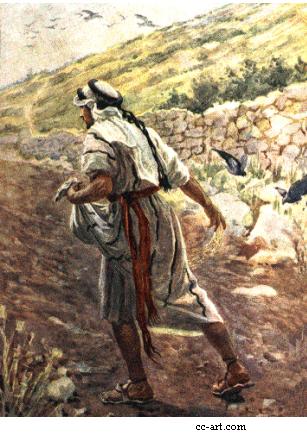
Isaiah l. 4   Psalm 33, 93 | 139;   ii Corinthians xi. 19   &   St. Luke viii. 4

Homilies

on the good ground are they, which in an honest and good heart,
 having heard the word, keep it, and bring forth fruit with patience

Chrysostom commenting on the Second Epistle to the Corinthians on evading the sin of envy.

But if the glory that cometh of men be so greatly to be coveted in thy account, and if it quite disquiets thee that such and such an one is applauded of the many; when thou beholdest him in the enjoyment of that applause, pass over in thy thought to the world to come and the glory which is there. And just as when hurrying to escape the onset of a wild beast, thou enterest into a cabin and shuttest to the doors; so now also flee unto the life to come, and that unspeakable glory. For so shalt thou both tread this under thy feet, and wilt easily lay hold upon that, and wilt enjoy the true liberty, and the eternal good things; whereunto may we all attain through the grace and love towards men of our Lord Jesus Christ, with Whom to the Father, with the Holy Spirit, be glory, might, honor, now and ever, and world without end. Amen.

Read it all at the link


--
Released by Primus Pilus-Sabbatical
Legio Christi-Ecclesia Militans
"Let us therefore follow after the things which make for peace, and things wherewith one may edify another" [St. Paul's Epistle to the Romans 14:19]

* ORDO CENTURIONUM * IN HOC SIGNO VINCES * TIME DEUM ET OPERARE IUSTITIAM
2011/02/19

The Sunday called Septuagesima MMXI


the third Sunday before Lent

O LORD, we beseech thee favourably to hear the prayers of thy people; that we which are justly punished for our offences, may be mercifully delivered by thy goodness, for the glory of thy Name; through Jesus Christ our Saviour, who liveth and reigneth with thee and the Holy Ghost ever, one God, world without end. Amen.

Source: Sacramentary of Bishop Gregory of Rome [600 AD]. The collect shows the great stress that Gregory knew from all sorts of calamities and threats - often perceived directly as a result of the sin of the nation. Note the pentitent tone of the collect in this somber season. This pre-lenten season of three Sundays was instituted in about 700. Septuagesima is the pre-Lent Sunday approximately 70 days before Easter.

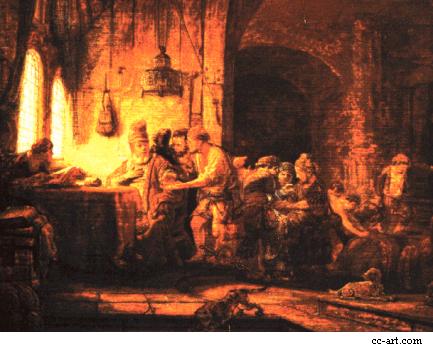
Joshua i:1   Psalms 8, 148 | 104;   1 Corinthians ix. 24   &   St. Matthew xx. 1

Homilies

I will give unto this last, even as unto thee. 
Is it not lawful for me to do what will with mine own?


Chrysostom wrote,

From everything then it is manifest to us, that the parable is spoken with reference to them who from earliest youth, and those who in old age and more tardily, lay hold on virtue; to the former, that they may not be proud, neither reproach those called at the eleventh hour; to the latter, that they may learn that it is possible even in a short time to recover all. For since He had been speaking about earnestness, and the casting away of riches, and contempt of all one's possessions, but this needed much vigor of mind and youthful ardor; in order to kindle in them a fire of love, and to give vigor to their will, He shows that it is possible even for men coming later to receive the hire of the whole day. But He doth not say it thus, lest again He should make them proud, but he shows that the whole is of His love to man, and because of this they shall not fail, but shall themselves enjoy the unspeakable blessings.


Read it all at the link


Finis

--
Released by Primus Pilus-Sabbatical
Legio Christi-Ecclesia Militans
"Let us therefore follow after the things which make for peace, and things wherewith one may edify another" [St. Paul's Epistle to the Romans 14:19]

* ORDO CENTURIONUM * IN HOC SIGNO VINCES * TIME DEUM ET OPERARE IUSTITIAM

2011/02/11

The Sixth Sunday after the Epiphany - MMXI


O GOD, whose blessed Son was manifested that he might destroy the works of the devil, and make us the sons of God, and heirs of eternal life; Grant us, we beseech thee, that, having this hope, we may purify ourselves, even as he is pure; that, when he shall appear again with power and great glory, we may be made like unto him in his eternal and glorious kingdom; where with thee, O Father, and thee, O Holy Ghost, he liveth and reigneth ever, one God, world without end. Amen.

This Collect was added in 1662. It clearly poinst to the Gospel of the day and the Second Coming of Christ

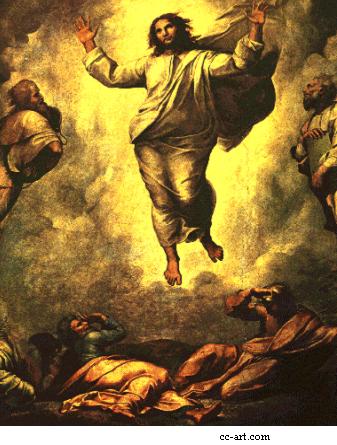
1 St. John iii. 1   &   St. Matthew xxiv. 23

Homiles


there shall arise false Christs, and false prophets, and shall shew great signs and wonders; insomuch that, if it were possible, they shall deceive the very elect

Chrysostom wrote,

"Then shall appear the sign of the Son of Man in Heaven;" that is, the cross being brighter than the sun, since this last will be darkened, and hide himself, and that will appear when it would not appear, unless it were far brighter than the beams of the sun. But wherefore doth the sign appear? In order that the shamelessness of the Jews may be more abundantly silenced. For having the cross as the greatest plea, Christ thus cometh to that judgment-seat, showing not His wounds only, but also the death of reproach. "Then shall the tribes mourn," for there shall be no need of an accusation, when they see the cross; and they shall mourn, that by His death they are nothing benefited; because they crucified Him whom they ought to have adored.

Read it all at the link...

--
Released by Primus Pilus-Sabbatical
Legio Christi-Ecclesia Militans
"Let us therefore follow after the things which make for peace, and things wherewith one may edify another" [St. Paul's Epistle to the Romans 14:19]

* ORDO CENTURIONUM * IN HOC SIGNO VINCES * TIME DEUM ET OPERARE IUSTITIAM

2011/02/04

The Fifth Sunday after the Epiphany


O LORD, we beseech thee to keep thy household continually in thy true religion; that they who do lean only upon the hope of thy heavenly grace may evermore be defended by thy mighty power; through Jesus Christ our Lord. Amen.

Source: Sacrementary of Bishop Gregory of Rome [600 AD]. Cranmer added "Church" to the "familia".

Habakkuk i. 12, Psalm 112, Colossians iii. 12   &   St. Matthew xiii. 24

Homilies

Gather ye together first the tares, and bind them in bundles to burn them:
but gather the wheat into my barn


Chrysostom wrote,

" Many of the prelates, I mean, bringing into the churches wicked men, disguised heresiarchs, gave great facility to the laying that kind of snare. For the devil needs not even to take any trouble, when he hath once planted them among us. And how is it possible not to sleep? one may say. Indeed, as to natural sleep, it is not possible; but as to that of our moral faculty, it is possible. Wherefore Paul also said, "Watch ye, stand fast in the faith."

"Darnel is a weed grass (probably bearded darnel or Lolium temulentum) that looks very much like wheat until it is mature, when the seeds reveal a great difference. Darnel seeds aren't good for much except as chicken feed or to burn to prevent the spread of this weed" (World English Dictionary).


Read it all at the link above

Finis
-- 
Released by Primus Pilus-Sabbatical
Legio Christi-Ecclesia Militans
"Let us therefore follow after the things which make for peace, and things wherewith one may edify another" [St. Paul's Epistle to the Romans 14:19]

* ORDO CENTURIONUM * IN HOC SIGNO VINCES * TIME DEUM ET OPERARE IUSTITIAM
2011/01/29

The Fourth Sunday after the Epiphany


GOD, which knowest us to be set in the midst of so many and great dangers, that for man's frailness, we cannot always stand uprightly; Grant to us the health of body and soul that all those things which we suffer for sin, by thy help we may pass and overcome, through Christ our Lord. Amen.

Source: Sacrementary of Bishop Gregory of Rome. This is based on the collect for the Ember Saturday in Lent. Gregory lived in a very troubled time for the Roman Empire as is indicated in this collect and aligned with the Gospel appointed for that day, Matt 8-23-27, the storm upon the sea, when the boat was so tossed that they disciples could not stand upright. This was somewhat reworded in the BCP of 1662

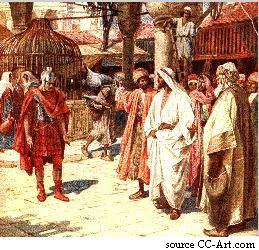
Romans xiii. 1   Psalms 75, 76 | 107;   St. Matthew viii. 1

Homilies

Lord, I am not worthy that thou shouldest come under my roof:
but speak the word only, and my servant shall be healed


Chrysostom wrote,

What then saith the centurion? "I am not worthy that thou shouldest come under my roof. "  Let us hearken, as many as are to receive Christ: for it is possible to receive Him even now. Let us hearken, and emulate, and receive Him with as great zeal; for indeed, when thou receivest a poor man who is hungry and naked, thou hast received and cherished Him.

 "But say in a word only,and my servant shall be healed." See this man also, how, like the leper, he hath the right opinion touching Him. For neither did this one say, "entreat," nor did he say, "pray, and beseech," but "command only." And then from fear lest out of modesty He refuse, he saith,"For I also am a man under authority, having under me soldiers; and I say to this man, go, and he goeth; and to another, come, and he cometh; and to my servant, do this, and he doeth it."....

Wherefore at the centurion He both marvels, and prefers him to all the people, and honors him with the gift of the kingdom, and provokes the rest to the same zeal. And to show thee that for this end He so spake, viz. for the instructing of the rest to believe in like manner, listen to the exactness of the evangelist, how he hath intimated it. For, "Jesus," saith he, "turned Him about, and said to them that followed Him, I have not found so great faith, no, not in Israel."

Prayer... 

ALMIGHTY God, our Sovereign Lord, who didst heal the servant at Capernaum in accordance with the Centurion's great faith; we beseech thee, strengthen us through the power of thy Spirit, that we might always ask those things that are requisite and necessary in faith, knowing that thou wilt answer them according to thy righteous will. Through Jesus Christ our Lord, who liveth and reigneth with thee and the Holy Ghost, one God, now and evermore. Amen

note: The Order remembers this saint on the 22 of June http://orderofcenturions.org/capernaum_centurion.html

FINIS
--
Released by Primus Pilus- Seventh Year Sabbatical 
Legio Christi-Ecclesia Militans
"Let us therefore follow after the things which make for peace, and things wherewith one may edify another" [St. Paul's Epistle to the Romans 14:19]

* ORDO CENTURIONUM * IN HOC SIGNO VINCES * TIME DEUM ET OPERARE IUSTITIAM
2011/01/21

The Third Sunday after the Epiphany -- MMXI


Chrysostom on Romans

ALMIGHTY and everlasting God, mercifully look upon our infirmities, and in all our dangers and necessities stretch forth thy right hand to help and defend us; through Jesus Christ our Lord. Amen.

Source: Sarum Missal. Orginally related to the epistle appointed for this Sunday of Matthew 8:1-13 where Jesus put forth his hand

Homily of Chrysostom

 Chrysostom wrote on Romans xii, 18,  "If it be possible, as much as lieth in you, live peaceably with all men."

This is that: "let your light shine before men" (Matt. v. 16), not that we are to live for vanity, but that we are not to give those who have a mind for it a handle against us. Whence he says also in another place, "Give none offence, neither to the Jews, nor to the Gentiles, nor to the Church of God." (1 Cor. x. 32.) And in what follows he limits his meaning well, by saying, "If it be possible." For there are cases in which it is not possible, as, for instance, when we have to argue about religion, or to contend for those who are wronged. And why be surprised if this be not universally possible in the case of other persons, when even in the case of man and wife he broke through the rule? "But if the unbelieving depart, let him depart." (1 Cor. vii. 15.) And his meaning is nearly as follows: Do thine own part, and to none give occasion of war or fighting, neither to Jew nor Gentile. But if you see the cause of religion suffering anywhere, do not prize concord above truth, but make a noble stand even to death. And even then be not at war in soul, be not averse in temper, but fight with the things only. For this is the import of "as much as in you lieth, be at peace with all men." But if the other will not be at peace, do not thou fill thy soul with tempest, but in mind be friendly as I said before, without giving up the truth on any occasion.

Read it all at the link.

Finis

--
Released by Primus Pilus-Sabbatical
Legio Christi-Ecclesia Militans
"Let us therefore follow after the things which make for peace, and things wherewith one may edify another" [St. Paul's Epistle to the Romans 14:19]

* ORDO CENTURIONUM * IN HOC SIGNO VINCES * TIME DEUM ET OPERARE IUSTITIAM

2011/01/15

The Second Sunday after the Epiphany


The Baptism of Chirst

ALMIGHTY and everlasting God, who dost govern all things in heaven and earth; Mercifully hear the supplications of thy people, and grant us thy peace all the days of our life; Amen.

Archbishop Cranmer translated this from Latin. Originally a prayer for outward peace.

In the Early Church, the birth of Christ, the Magi visit, and Baptism were all celebrated on the 6th. The Protestant Episcopal Church moved the baptism Gospel to the 2nd Sunday after Epiphany, to remember this event during Epiphany . The Lutheran Church remembers the Baptism on Third Sunday after Christmas. The Latin Church remembers it on the First Sunday after Epiphany. The Orthodox Church continues to celebrate the Baptism on the Theophany, 6 January, with the visit of the Magi. Theophany literally means "Manifestation of God".


coming up out of the water, he saw the heavens opened, and the Spirit, like a dove, descending upon him: and there came a voice from heaven, saying, Thou art my beloved Son, in whom I am well pleased. 

Isaiah 45:1,   Psalm 96, 97| 45, 46,   Romans xii. 6  &   St. Mark i. 1

Chrysostom wrote,

We shall now say something about the present feast. Many celebrate the feastdays and know their designations, but the cause for which they were established they know not. Thus concerning this, that the present feast is called Theophany -- everyone knows; but what this is -- Theophany, and whether it be one thing or another, they know not. And this is shameful -- every year to celebrate the feastday and not know its reason.... Why then is this day called Theophany? Because Christ made Himself known to all -- not then when He was born -- but then when He was baptised. Until this time He was not known to the people. And that the people did not know Him, Who He was, listen about this to John the Baptist, who says: "Amidst you standeth, Him Whom ye know not of" (Jn.1:26). And is it surprising that others did not know Him, when even the Baptist did not know Him until that day? "And I -- said he -- knew Him not: but He that did send me to baptise with water, about This One did tell unto me: over Him that shalt see the Spirit descending and abiding upon Him, This One it is Who baptiseth in the Holy Spirit" (Jn. 1:33)...

Read it all at the link.


--
Released by Primus Pilus-Sabbatical
Legio Christi-Ecclesia Militans
"Let us therefore follow after the things which make for peace, and things wherewith one may edify another" [St. Paul's Epistle to the Romans 14:19]

* ORDO CENTURIONUM * IN HOC SIGNO VINCES * TIME DEUM ET OPERARE IUSTITIAM
2011/01/08

The First Sunday after the Epiphany MMXI


O LORD, we beseech thee mercifully to receive the prayers of thy people who call upon thee; and grant that they may both perceive and know what things they ought to do, and also may have grace and power faithfully to fulfill the same; through Jesus Christ our Lord. Amen.

Source Sacramentary of Bishop Gregory of Rome [600 AD]. It is based on James 4:17, John 13:17, and Luke 12:47 -[Barbee and Zahl] The collect tell us we pray to "DO WHAT IS RIGHT!"


Isaiah lx. 1, Psalm 47, 48 | 66, 67;   Romans xii. 1   &   St. Luke ii. 41 
Homilies

all that heard him were astonished at his understanding


Ambrose wrote, 

Of his parents he asketh : How is it that ye sought me? But note that there are two generations in Christ ; the one by which he is begotten of his divine Father, the other by which he is born of his human Mother. That from his Father is his Eternal Generation as God the Son ; that from his Mother is the same whereby he is invested with all that belongeth to our nature, and rendered a victim to our miseries. 


How is it that ye sought me? wist ye not that I must be about my Father's business?


Jesus increased in wisdom and stature, and in favour with God and man 


--
Released by Primus Pilus
Legio Christi-Ecclesia Militans
"Let us therefore follow after the things which make for peace, and things wherewith one may edify another" [St. Paul's Epistle to the Romans 14:19]

* ORDO CENTURIONUM * IN HOC SIGNO VINCES * TIME DEUM ET OPERARE IUSTITIAM
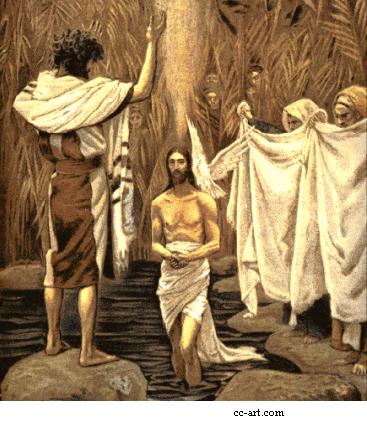
2011/01/01

The Second Sunday after Christmas MMXI


ALMIGHTY God, who hast poured upon us the new light of thine incarnate Word; Grant that the same light enkindled in our hearts may shine forth in our lives; through Jesus Christ our Lord. Amen.

Isaiah lxi. 1, Psalms LXXXV, LXXXVII | XC, XCI   &  St. Matthew ii. 19 
Homilies

Archelaus did reign in Judaea in the room of his father Herod
 

Jerome wrote:

But when he heard that Archelaus did reign in Judaea in the room of his father Herod, he was afraid to go thither. There are some persons so grossly ignorant of history that they confuse themselves over the two Herods, as if the one mentioned here were the same who afterwards set our Lord at nought during his passion, and they cannot understand how he should now be said to be dead. The Herod who was made friends with Pilate over Christ's death was the son of the Herod who massacred the infants of Bethlehem, and the brother of Archelaus

More on Archelaus  http://en.wikipedia.org/wiki/Herod_Archelaus

O LORD Jesus Christ, who saidst unto thine Apostles, Peace I leave with you, my peace I give unto you; Regard not our sins, but the faith of thy Church; and grant to it that peace and unity which is according to thy will, who livest and reignest with the Father and the Holy Ghost, one God, world without end. Amen.

 FINIS- 

Released by Primus Pilus-Sabbatical
Legio Christi-Ecclesia Militans
"Let us therefore follow after the things which make for peace, and things wherewith one may edify another" [St. Paul's Epistle to the Romans 14:19]

* ORDO CENTURIONUM * IN HOC SIGNO VINCES * TIME DEUM ET OPERARE IUSTITIAM
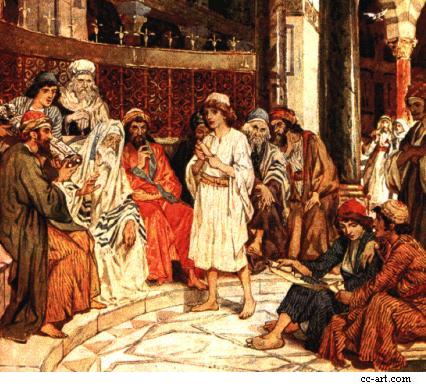
2010/12/25

The First Sunday after Christmas


ALMIGHTY God, who hast given us thy only-begotten Son to take our nature upon him, and as at this time to be born of a pure virgin; Grant that we being regenerate, and made thy children by adoption and grace, may daily be renewed by thy Holy Spirit; through the same our Lord Jesus Christ, who liveth and reigneth with thee and the same Spirit ever, one God, world without end. Amen.

Source: Archbishop Cranmer [1549]. [Barbee & Zahl] This is the same collect as is appointed for Christmas Day

Galatians iv. 1, Psalms 2, 8 | 89   &  St. Matthew i. 18

Homilies

she was 'found' with child

Chrysostom wrote:

And wherefore did she not conceive before her espousal? It was, as I said at first, that what had been done might be concealed awhile, and that the Virgin might escape every evil suspicion. For when he, who had most right of all to feel jealousy, so far from making her a show, or degrading her, is found even receiving and cherishing her after her conception; it was quite clear that, unless he had fully persuaded himself that what was done was of the operation of the Holy Spirit, he would not have kept her with him, and ministered to her in all other things. And most properly hath he said, that "she was 'found' with child," the sort of expression that is wont to be used with respect to things strange, and such as happen beyond all expectation, and are unlooked for. Proceed therefore no further, neither require anything more than what hath been said; neither say thou, "But how was it that the Spirit wrought this of a virgin?" For if, when nature is at work, it is impossible to explain the manner of the formation; how, when the Spirit is working miracles, shall we be able to express these? And lest thou shouldest weary the evangelist, or disturb him by continually asking these things, he hath said who it was that wrought the miracle, and so withdrawn himself. "For I know," saith he, "nothing more, but that what was done was the work of the Holy Ghost."

Read it all at the link

Finis

--
Released by Primus Pilus--Sabbatical
Legio Christi-Ecclesia Militans
"Let us therefore follow after the things which make for peace, and things wherewith one may edify another" [St. Paul's Epistle to the Romans 14:19]

* ORDO CENTURIONUM * IN HOC SIGNO VINCES * TIME DEUM ET OPERARE IUSTITIAM

2010/12/24

The Eve of the Nativity of our Lord


[December 24] 

GOD, who makest us glad with the yearly remembrance of the birth of thine only Son Jesus Christ; Grant that as we joyfully receive him for our Redeemer, so we may with sure confidence behold him when he shall come to be our Judge, who liveth and reigneth with thee and the Holy Ghost, one God, world without end. Amen.

Source Sacramentary of Bishop Gregory of Rome [604 AD]. This Collect was used in the Roman liturgy on the Vigil of the Nativity.

Hebrews i. 1   &  St. Luke ii. 1

Joseph also went up from Galilee, out of the city of Nazareth, into Judaea, unto the city of David, which is called Bethlehem to be taxed with Mary his espoused wife, being great with child


seasonal graphic

--
Released by Primus Pilus --- Sabbatical
Legio Christi-Ecclesia Militans
"Let us therefore follow after the things which make for peace, and things wherewith one may edify another" [St. Paul's Epistle to the Romans 14:19]

* ORDO CENTURIONUM * IN HOC SIGNO VINCES * TIME DEUM ET OPERARE IUSTITIAM
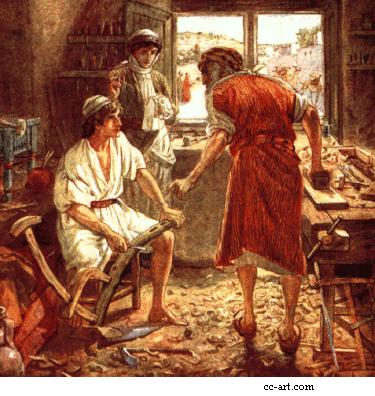
2010/12/17

The Fourth Sunday in Advent


O LORD, raise up, we pray thee, thy power, and come among us, and with great might succour us; that whereas, through our sins and wickedness, we are sore let and hindered, thy bountiful grace and mercy may speedily help and deliver us; through Jesus Christ our Lord, to whom, with thee and the Holy Ghost, be honour and glory, world without end. Amen. 

Source: Bishop Gelasius of Rome Sacramentary [464 AD]. The 1662 edition added the "running the race that is before us" "Succor" is to run to help, while "sore let" is to thwart, hinder

Isaiah xl. 1, Psalm 80, Philippians iv. 4   &  St. John i. 19.

Homilies

 I am not the Christ.

__________

Augustine wrote of the Gospel

You have very often heard, holy brethren, and you know well, that John the Baptist, in proportion as he was greater than those born of women, and was more humble in his acknowledgment of the Lord, obtained the grace of being the friend of the Bridegroom; zealous for the Bridegroom, not for himself; not seeking his own honor, but that of his Judge, whom as a herald he preceded. Therefore, to the prophets who went before, it was granted to predict concerning Christ; but to this man, to point Him out with the finger. For as Christ was unknown by those who did not believe the prophets before He came, He remained unknown to them even when present. For He had come humbly and concealed from the first; the more concealed in proportion as He was more humble: but the people, despising in their pride the humility of God, crucified their Saviour, and made Him their condemner. 

But will not He who at first came concealed, because humble, come again manifested, because exalted? You have just listened to the Psalm: "God shall come manifestly, and our God shall not keep silence." He was silent that He might be judged, He will not be silent when He begins to judge. It would not have been said, "He will come manifestly," unless at first He had come concealed; nor would it have been said, "He shall not keep silence," unless He had first kept silence. How was He silent? Interrogate Isaiah: "He was brought as a sheep to the slaughter, and as a lamb before his shearer was dumb, so He opened not His mouth." "But He shall come manifestly, and shall not keep silence." In what manner "manifestly"? "A fire shall go before Him, and round about Him a strong tempest." That tempest has to carry away all the chaff from the floor, which is now being threshed; and the fire has to burn what the tempest carries away. But now He is silent; silent in judgment, but not silent in precept. For if Christ is silent, what is the purpose of these Gospels? what the purpose of the voices of the apostles, what of the canticles of the Psalms, what of the declarations of the prophets? In all these Christ is not silent. But now He is silent in not taking vengeance: He is not silent in not giving warning. But He will come in glory to take vengeance, and will manifest Himself even to all who do not believe on Him. But now, because when present He was concealed, it behoved that He should be despised. For unless He had been despised, He would not have been crucified; if He had not been crucified, He would not have shed His blood-the price by which He redeemed us. But that He might give a price for us, He was crucified; that He might be crucified, He was despised; that He might be despised, He appeared in humility. 

Yet because He appeared as it were in the night, in a mortal body, He lighted for Himself a lamp by which He might be seen. That lamp was John, concerning whom you lately heard many things: and the present passage of the evangelist contains the words of John; in the first place, and it is the chief point, his confession that he was not the Christ. But so great was the excellence of John, that men might have believed him to be the Christ: and in this he gave a proof of his humility, that he said he was not when he might have been believed to have been the Christ; therefore, "This is the testimony of John, when the Jews sent priests and Levites to him from Jerusalem to ask him, Who art thou?" But they would not have sent unless they had been moved by the excellence of his authority who ventured to baptize. "And he confessed, and denied not." What did he confess? "And he confessed, I am not the Christ." 


Read it all at the link above.

FINIS
 
Released by Primus Pilus
Legio Christi-Ecclesia Militans
"Let us therefore follow after the things which make for peace, and things wherewith one may edify another" [St. Paul's Epistle to the Romans 14:19]

* ORDO CENTURIONUM * IN HOC SIGNO VINCES * TIME DEUM ET OPERARE IUSTITIAM
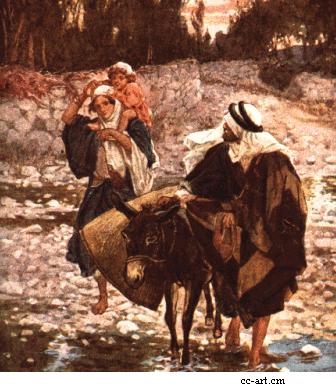
2010/12/11

The Third Sunday in Advent


O LORD Jesus Christ, who at thy first coming didst send thy messenger to prepare thy way before thee; Grant that the ministers and stewards of thy mysteries may likewise so prepare and make ready thy way, by turning the hearts of the disobedient to the wisdom of the just, that at thy second coming to judge the world we may be found an acceptable people in thy sight, who livest and reignest with the Father and the Holy Spirit ever, one God, world without end. Amen. 


Source: 1662 Prayer Book. This collect replaced a short Collect from the Middle Ages. It relates to Romans xv.4 and Luke xxi. 25. The creedal articles are obvious in it. [Barbee & Zahl]

Isaiah 35, Psalm 52, 53 | 93, 94; 1 Corinthians iv. 1   &  St. Matthew xi. 2

Homilies

Art thou he that should come..?

Chrysostom wrote in today's homily of John Baptist and our Lord:

So then the prophets, so many years before, speak of the hall of judgment, and of the condemnation, and of them that were crucified with Him, and of the division of the garments, and of the lot cast upon them, and of many more things besides (for indeed it is unnecessary to allege all now, lest we make our discourse long): and was this man [John Baptist], greater than them all, ignorant of all these things? Nay, how should this be reasonable? And why did he not say, "Art thou He that should come to hell," but simply, "He that should come?" Although this were far more absurd than the others, I mean their saying, "he therefore said these things, that he might preach there also after his departure." To whom it were seasonable to say, "Brethren, be not children in understanding, howbeit in malice be ye children." For the present life indeed is the season for right conversation, but after death is judgment and punishment. "For in hell," it is said, "who will confess unto thee?"

Read it all at the link above.

Finis
--

Released by Primus Pilus
Legio Christi-Ecclesia Militans
"Let us therefore follow after the things which make for peace, and things wherewith one may edify another" [St. Paul's Epistle to the Romans 14:19]

* ORDO CENTURIONUM * IN HOC SIGNO VINCES * TIME DEUM ET OPERARE IUSTITIAM
2010/12/03

The Second Sunday in Advent


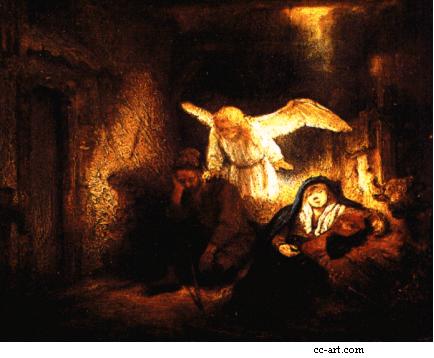
BLESSED Lord, who hast caused all holy Scriptures to be written for our learning; Grant that we may in such wise hear them, read, mark, learn, and inwardly digest them, that by patience and comfort of thy holy Word, we may embrace, and ever hold fast, the blessed hope of everlasting life, which thou hast given us in our Saviour Jesus Christ. Amen.

Source (1st Collect): Archbishop Thomas Cranmer [1549 AD]. The emphasis on Scripture is enunciated here. To understand Cranmer and his desire to encourage Bible reading, read the Preface to the Cranmer Bible and the Preface to the 1549 Prayer Book. [Barbee and Zahl] Cranmer proposed continuous reading of the Scriptures - "lectio continua". Archbishop John Chrysostom, among other early doctors, was an advocate and practicioner of lectio continua.

Isaiah 55, Psalms 80, 82 | 25, 26 Romans xv. 4    St. Luke xxi. 25

Homily

graphic
he that shall rise to reign over the Gentiles
coming ... with power and great glory

Chrysostom wrote:

"And that the Gentiles might glorify God for His mercy."

But what he means is this. Those of the Jews would have had promises, even though they were unworthy. But thou hadst not this even, but wast saved from love towards man alone, even if, to put it at the lowest, they too would not have been the better for the promises, unless Christ had come. But yet that he might amalgamate them and not allow them to rise up against the weak, he makes mention of the promises. But of these he says that it was by mercy alone that they were saved. Hence they are the most bound to glorify God. And a glory it is to God that they be blended together, be united, praise with one mind, bear the weaker, neglect not the member that is broken off. Then he adds testimonies, in which he shows that the man of the Jews ought to blend himself with those of the Gentiles; and so he says, "As it is written, For this cause I will confess to Thee among the Gentiles, O Lord, and will sing unto Thy Name."

 "And, rejoice, ye Gentiles, with His people. And, Praise the Lord, all ye Gentiles"; "and let all people laud Him." "And, There shall be a root of Jesse, and He that shall rise to reign over the Gentiles, in Him shall the Gentiles trust."

Now all these quotations he has given to show that we ought to be united, and to glorify God; and also, to humble the Jew, that he may not lift himself up over these, since all the prophets called these, as well as to persuade the man of the Gentiles to be lowly, by showing him that he had a larger grace to answer for. Then he concludes his argument with a prayer again.

"Now the God of hope fill you with all joy and peace in believing, that ye may abound in hope, through the power of the Holy Ghost."

Amen

Read it all at the link above.

Finis

--
Released by Primus Pilus
Legio Christi-Ecclesia Militans
"Let us therefore follow after the things which make for peace, and things wherewith one may edify another" [St. Paul's Epistle to the Romans 14:19]

* ORDO CENTURIONUM * IN HOC SIGNO VINCES * TIME DEUM ET OPERARE IUSTITIAM
2010/11/26

The First Sunday in Advent

ALMIGHTY God, give us grace that we may cast away the works of darkness, and put upon us the armour of light, now in the time of this mortal life, in which thy Son Jesus Christ came to visit us in great humility; that in the last day, when he shall come again in his glorious majesty to judge both the quick and the dead, we may rise to the life immortal, through him who liveth and reigneth with thee and the Holy Ghost, now and ever. Amen..

Source: Archbishop Thomas Cranmer in 1549 Prayer Book. Based on Romans 13:8-12 and Mathew 21:1-13 which are appointed for this Sunday [Barbee and Zahl]

Admonition and Exhortation for Communion

Isaiah xxviii. 14, Romans xiii. 8   &  St. Matthew xxi. 1
Psalms viii, l | xcvi, xcvii

Homilies

Christ came to visit us in great humility

John Chrysostom wrote

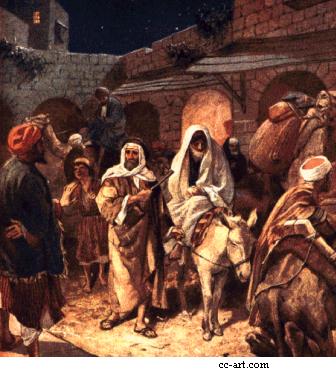
He was fulfilling also another prophecy, one which was twofold, one part in words, and another in deeds. And that in deeds was, by the sitting on the ass; and that by words, the prediction of Zacharias; because he had said, that the King should sit on an ass. And He, having sat and having fulfilled it, gave to the prophecy another beginning again, by what He was doing typifying beforehand the things to come. How and in what manner? He proclaimed beforehand the calling of the unclean Gentiles, and that He should rest upon them, and that they should yield to Him and follow Him, and prophecy succeeded to prophecy. But to me He seemeth not for this object only to sit on the ass, but also as affording us a standard of self-denial. For not only did He fulfill prophecies, nor did He only plant the doctrines of the truth, but by these very things He was correcting our practice for us, everywhere setting us rules of necessary use, and by all means amending our life. For this cause, I say, even when He was to be born He sought not a splendid house, nor a mother rich and distinguished, but a poor woman, and one that had a carpenter as her betrothed husband; and is born in a shed, and laid in a manger: and choosing His disciples, He chose not orators and wise men, not rich men and nobly born, but poor men, and of poor families, and in every way undistinguished; and providing His table, at one time He sets before Himself barley loaves, and at another at the very moment commands the disciples to buy at the market. And making His couch, He makes it of grass, and putting on raiment, He clothes Himself in what is cheap, and in no respect different from the common sort; and a house He did not so much as possess. And if He had to go from place to place, He did this travelling on foot, and so travelling, as even to grow weary. And sitting, He requires no throne nor pillow, but sits on the ground, sometimes in the mountain, and sometimes by the well, and not merely by the well, but also alone, and talks with a Samaritan woman.


Finis
--
Released by Primus Pilus
Legio Christi-Ecclesia Militans
"Let us therefore follow after the things which make for peace, and things wherewith one may edify another" [St. Paul's Epistle to the Romans 14:19]

* ORDO CENTURIONUM * IN HOC SIGNO VINCES * TIME DEUM ET OPERARE IUSTITIAM
2010/11/19

The Sunday next before Advent


Homily of Augustine on John vi. 53. and Jeremiah
Home, Sunday before Advent

STIR up, we beseech thee, O Lord, the wills of thy faithful people; that they, more readily following after the effect of thy Divine working, may obtain from thy fatherly goodness larger assistance; plenteously bringing forth the fruit of good works, may by thee be plenteously rewarded; through Jesus Christ our Lord. Amen.

Galatius Sacramentary. English AB Cranmer translated the "Divine workings as "good works" and made and some other translation adaptions that actually take this collect away from its very strong statement on grace and God's action. The title of this collect "The Sunday next before Advent" was that which was used in the Sarum Missal. This translation is from Collects of the Day vol II.,

Jeremiah xxiii, Psalm 149 &  St. John vi.
Homily of Augustine on Psalm CXLIX


this is his name whereby he shall be called, 
THE LORD OUR RIGHTEOUSNESS

This week I have selected a Gospel reading from the same chapter as that which was appointed in the 1662 prayer book, but later on in the chapter, and one that is familiar to you I pray. The opening paragraph of the homily concerns the nature of the sacrament of the Body and Blood of Christ.  While reflecting on John vi. 53, "Except ye eat the flesh...."   Augustine preached,  "But then this shall be, that is, the Body and the Blood of Christ shall be each man's Life; if what is taken in the Sacrament visibly is in the truth itself eaten spiritually, drunk spiritually.

This homily also touches on the appointed OT reading of Jeremiah that serves for the Epistle, and which is quoted below:

This then is the righteousness of God. As it is called, "The Lord's salvation," not whereby the Lord is saved, but which He giveth to them whom He saveth; so too the grace of God through Jesus Christ our Lord is called the righteousness of God, not as that whereby the Lord is righteous, but whereby He justifieth those whom of ungodly He maketh righteous. But some, as the Jews in former times, both wish to be called Christians, and still ignorant of God's righteousness, desire to establish their own, even in our own times, in the times of open grace, the times of the full revelation of grace which before was hidden; in the times of grace now manifested in the floor, which once lay hid in the fleece. I see that a few have understood me, that more have not understood, whom I will by no means defraud by keeping silence. Gideon, one of the righteous men of old, asked for a sign from the Lord, and said, "I pray, Lord, that this fleece which I put in the floor be bedewed, and that the floor be dry." And it was so; the fleece was bedewed, the whole floor was dry. In the morning he wrung out the fleece in a basin; forasmuch as to the humble is grace given; and in a basin, ye know what the Lord did to His disciples. Again, he asked for another sign; "O Lord, I would," saith he, "that the fleece be dry, the floor bedewed." And it was so. Call to mind the time of the Old Testament, grace was hidden in a cloud, as the rain in the fleece. Mark now the time of the New Testament, consider well the nation of the Jews, thou wilt find it as a dry fleece; whereas the whole world, like that floor, is full of grace, not hidden, but manifested. Wherefore we are forced exceedingly to bewail our brethren, who strive not against hidden, but against open and manifested grace. There is allowance for the Jews. What shall we say of Christians? Wherefore are ye enemies to the grace of Christ? Why rely ye on yourselves? Why unthankful? For why did Christ come? Was not nature here before? Was not nature here, which ye only deceive by your excessive praise? Was not the Law here? But the Apostle says, "If righteousness come by the Law, then Christ is dead in vain." What the Apostle says of the Law, that say we of nature to these men. "If righteousness come by nature, then Christ is dead in vain."

This was part of a sermon against the heresy of the Pelagians. Those who imagined they were of their own nature able to do that which God, in his law, has required of men, so that they only needed Jesus because they did not do that which they all were totally capable of doing.  The fact is that the scriptures throughout deny this fallacy. Mankind is fallen. Men can no more "will" to do righteously without the grace of God than they can will to walk on water of their own desire. Our wills are corrupt and therefore we will for that which is corrupt. Man is in the bondage of sin until the Lord shall make him free.   God spoke this truth through Jeremiah in today's reading, "The Lord [is] our Righteousness" and not we of ourselves.

Look at today's collect too. This is a clearer rendering of the original Latin, I believe, than one finds in the prayer book translation.  The Early Church fathers had grasped this truth of God's leading, and it was only the error that crept into the thinking of men, corrupt thinking, that led some who called themselves Christians to claim such human power for pure righteousness of their own accord. Rather, "The Lord [is] our Righteousness and not we of ourselves.  

When that awful Last Great Day of the Lord comes, will you stand judgement on your corrupt will, feeble faith, and inadequate works?  Or will you not rather look to your only Advocate and Mediator who presents himself in that heavenly temple day and night?  Will you not admit you are saints saved by grace; and any good you have done is by his leading, his mercy, and his work in you?  Will you rather not look for the justification he promised for his elect through the merits of his good work, by faith, and give glory to God and say with the host, "The Lord [is] our Righteousness" and not we of ourselves?

Finis

--
Released by Primus Pilus
Legio Christi-Ecclesia Militans
"Let us therefore follow after the things which make for peace, and things wherewith one may edify another" [St. Paul's Epistle to the Romans 14:19]

* ORDO CENTURIONUM * IN HOC SIGNO VINCES * TIME DEUM ET OPERARE IUSTITIAM

2010/11/13

The Twenty-fourth Sunday after Trinity

 
Augustine on Psalm 145
Home, Twenty-fourth Sunday after Trinity

O LORD, we beseech thee, absolve thy people from their offences; that through thy bountiful goodness we may all be delivered from the bands of those sins, which by our frailty we have committed. Grant this, O heavenly Father, for Jesus Christ's sake, our blessed Lord and Saviour. Amen.

Source: Sacramentary of Bishop Leo of Rome [461] and of Gregory. Said the Sunday week before the penitential season of Advent, it begs God for absolution. Today's Gospel echoes this theme as the woman was released from her bands of infirmity through faith [Barbee and Zahl]

Psalm  145, Colossians i. 3   &  St. Matthew ix. 18 
Homily of Augustine on Psalm CXLV 

 "I will exalt Thee, my God, my King; and I will bless Thy Name for the age, and age upon age"


Comment

 David composed this psalm near the end of his life.  It is the last of the "acrostic" psalms, wherein each verse begins with a letter of the Hebrew alphabet.   

The first verse sets the tone for all that is to follow, as David then recounts his justification for his praise of God today and everyday forever:  Beginning in verse 1 for his fame; in verse 8, for his goodness; in verse 11 for his kingdom; in verse 14, for his providence; and in verse 17 for his justice, holiness and saving mercy.

Let us see what Augustine has written of the first and second verses:

"I will exalt Thee, my God, my King; and I will bless Thy Name for the age, and age upon age" (ver. 1). Ye see that the praise of God is here begun, and this praise is carried on even to the end of the Psalm....Now then begin to praise, if thou intendest to praise for ever. He who will not praise in this transitory "age," will be silent when "age upon age" has come. But lest any one should in any otherwise also understand what he saith, "I will praise Thy Name for the age," and should seek another age, wherein to praise, he saith, "Every day will I bless Thee" (ver. 2). Praise then and bless the Lord thy God every day, that when single days have passed, and there has come one day without end, thou mayest go from praise to praise, as "from strength to strength."  No day shall pass by, wherein I bless Thee not. And it is no wonder, if in thy day of joy thou bless the Lord. What if perchance some day of sorrow hath dawned on thee, as is natural in the circumstances of our mortal nature, as there is abundance of offences, as temptations are multiplied; what, if something sad befall thee, a man; wilt thou cease to praise God? wilt thou cease to bless thy Creator? If thou cease, thou hast lied in saying, "every day," etc. But if thou cease not, although it seem to thee to be ill with thee in the day of thy sorrow, yet in thy God it shall be well with thee....

Augustine has clearly stated the standard of worship for all Christians, and that is to praise God daily.  He did so, and had a rule in his church that all should say the Lord's prayer thrice daily in accordance with the tradition of the Old Testament admonition and the early church practice in morning and evening devotions at church (see the Apostolic Constitutions)

 We daily say, "Our Father, who art in heaven, hallowed be thy name", as our Lord taught us, and thereby do praise his name.
Hallelujah is the Hebrew term for "Praise the Lord", and a good praise to use, or its equivalent in your own language, as a part of your daily worship.

In the western tradition praise was always the beginning of any devotional office. Beginning with the first prayer book, and possibly before, the English worship began with the Lord's Prayer, and then followed with praise. The minister said, "O Lord open thou my lips", and the people responded, "And my mouth shall show forth thy praise". Thus, from the very beginning of morning and evening prayer the folk did praise the Lord and set the proper tone and sequence for all that was to follow.

Let  us follow the words of David in this psalm, and the encouragement of Augustine to his church, and practice a praise of the Lord each and every day, now and forever.

Read it all here: Homily of Augustine on Psalm CXLV 

Finis

-- 
Released by Primus Pilus
Legio Christi-Ecclesia Militans
"Let us therefore follow after the things which make for peace, and things wherewith one may edify another" [St. Paul's Epistle to the Romans 14:19]

* ORDO CENTURIONUM * IN HOC SIGNO VINCES * TIME DEUM ET OPERARE IUSTITIAM
2010/11/05

The Twenty-third Sunday after Trinity


Augustine on Psalm CXL 
Home for the Twenty-third Sunday after Trinity

O GOD, our refuge and strength, who art the author of all godliness; Be ready, we beseech thee, to hear the devout prayers of thy Church; and grant that those things which we ask faithfully we may obtain effectually; through Jesus Christ our Lord. Amen.

Source: Bishop Gregory of Rome [604 AD] Compare Psalm 46 God is our refuge and strength, a very present help [Barbee and Zahl]. The petition reminds one of Jesus' promise, 21:22 And all things, whatsoever ye shall ask in prayer, believing, ye shall receive.

Philippians iii. 17, Psalm cxxvii,  &  St. Matthew xxii. 15 
Homily of Augustine on Psalm CXL


"Deliver me, O Lord, from the wicked man"


Augustine wrote in his preparatory comments to Psalm 140.

 Our Lords have bidden me, brethren, and in them the Lord of all, to bring this Psalm to your understanding, so far as God giveth me to. May He help your prayers, that I may say those things which I ought to say, ye to hear, that to all of us the Word of God may be profitable. For all it doth not profit, for "all have not faith." 

We may also give thanks today that we are able to hear the words of this great doctor of the catholic and orthodox faith, and that the Word of God may be profitable.  Note his last sentence here.  We are commanded to preach the Gospel everywhere, but to those who have no faith, it profits not.

What this Psalm containeth, I believe that ye perceived when it was being chanted; for therein the Church of Christ, set in the midst of the wicked, complaineth and groaneth, and poureth out prayer to God. For her voice is in every such prophecy the voice of one in need and want, not yet satisfied, "hungering and thirsting after righteousness,"  for whom a certain fulness in the end hath been promised, and is reserved.... 

We hear Augustine again state that the Church chanted the psalms. I envy those readers whose congregations still chant the psalms in their churches.  Augustine speaks of being set in the midst of wickedness, and prepares us to the first verse.

"Deliver me, O Lord, from the wicked man" (ver. 1). Not from one only, but from the class; not from the vessels only, but from their prince himself, that is, the devil. Why "from man," if he meaneth from the devil? Because he too is called a man in a figure. ...Now then being made light, not in ourselves, but in the Lord, let us pray not only against darkness, that is, against sinners, whom still the devil possesseth, but also against their prince, the devil himself, who worketh in the children of disobedience. "Deliver me from the unrighteous man." The same as "from the wicked man." For he called him wicked because unrighteous, lest perchance thou shouldest think that any unrighteous man could be a good man. For many unrighteous men seem to be harmless; they are not fierce, are not savage, do not persecute nor oppress; yet are they unrighteous, because, following some other habit, they are luxurious, drunkards, given to pleasure....Wicked then is every unrighteous man, who must needs be harmful, whether he be gentle or fierce. Whoever falls in his way, whoever is taken by his snares, will find how harmful is that which he thought harmless. For, brethren, even thorns prick not with their roots. Pull up thorns from the ground, handle their roots, and see whether thou feelest pain. Yet that in the upgrowth which causeth thee pain, proceeded from that root. Let not then men please you who seem gentle and kind, yet are lovers of carnal pleasure, followers of polluted lusts, let them not please you. Though as yet they seem gentle, they are roots of thorns....And so, my brethren, body of Christ, members of Christ groaning among such wicked men, whomsoever ye find hurrying headlong into evil lusts and deadly pleasures, at once chide, at once punish, at once burn. Let the root be burnt, and there remaineth not whence the thorn may grow up. If ye cannot, be sure that ye will have them as enemies. They may be silent, they may hide their enmity, but they cannot love you. But since they cannot love you, and since they who hate you must needs seek your harm, let not your tongue and heart be slow to say to God, "Deliver me, O Lord, from the unrighteous man." 

I often here folk speak of those who harbor disordered and unrighteous lusts as being so "nice" and "kind". What does Augustine say?  "Let not then men please you who seem gentle and kind, yet are lovers of carnal pleasure, followers of polluted lusts, let them not please you."  

If the root is corrupt, the plant that exposed is corrupt as well. Be not deceived by "beautiful people" whose morals are an abomination.  Our Lord said two things in this regard: firstly that "Ye shall know them by their fruits", and secondly that "I am the vine, ye are the branches: He that abideth in me, and I in him, the same bringeth forth much fruit: for without me ye can do nothing".  Take the advice of Bishop Augustine, and when you encounter those who you suspect of such deep and disordered lives and moral corruption, go to the Lord in silent prayer and pray,  Deliver me, O Lord, from the wicked man. I would suggest also a prayer for them as your neighbor, that God in his mercy might reach down and touch them in such a way that they might turn from their inordinate and sinful affections to our Lord.


From all inordinate and sinful affections; and from all the deceits of the world, the flesh, and the devil, 
     Good Lord, deliver us.

Finis

--
Released by Primus Pilus
Legio Christi-Ecclesia Militans
"Let us therefore follow after the things which make for peace, and things wherewith one may edify another" [St. Paul's Epistle to the Romans 14:19]

* ORDO CENTURIONUM * IN HOC SIGNO VINCES * TIME DEUM ET OPERARE IUSTITIAM
2010/11/01

All Saints


[November 1]

O ALMIGHTY God, who hast knit together thine elect in one communion and fellowship, in the mystical body of thy Son Christ our Lord; Grant us grace so to follow thy blessed Saints in all virtuous and godly living, that we may come to those unspeakable joys which thou hast prepared for those who unfeignedly love thee; through the same thy Son Jesus Christ our Lord. Amen. 

At the beginning of morning prayer and for an anthem at communion:
The Lord is glorious in his saints; * O come, let us adore him


Revelation vii. 2   &   St. Matthew v. 1 
Homilies 
Hymn: For All the Saints

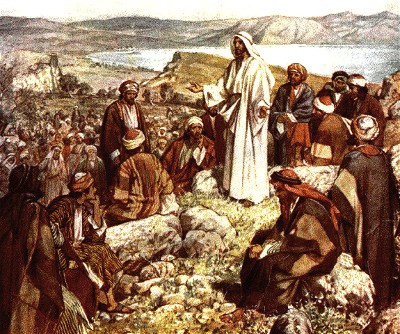
Rejoice, and be exceeding glad: for great is your reward in heaven

--
Released by Primus Pilus
Legio Christi-Ecclesia Militans
"Let us therefore follow after the things which make for peace, and things wherewith one may edify another" [St. Paul's Epistle to the Romans 14:19]

* ORDO CENTURIONUM * IN HOC SIGNO VINCES * TIME DEUM ET OPERARE IUSTITIAM

2010/10/29

The Twenty-second Sunday after Trinity


Augustine on Psalm 136
Home, 22nd Sunday after Trinity 

LORD, we beseech thee to keep thy household the Church in continual godliness; that through thy protection it may be free from all adversities, and devoutly given to serve thee in good works, to the glory of thy Name; through Jesus Christ our Lord. Amen.

Source: Sacramentary of Bishop Gregory of Rome [604 AD] The Latin used the word familia, which points to the traditional Roman family that was the basic and most important element of society. It included all in the household, including slaves, and was headed by the pater familias who was responsible for the welfare of all. This concept of the household is the basis of the Gospel story today.

Psalm: 136  Philippians i. 3   &  St. Mattxhew xviii. 21 
Homily of Augustine on Psalm CXXXVI

Give thanks unto the Lord, for He is good, 
* for His mercy endureth for ever

 
Comment

Augustine writes of Psalm 136:

"Give thanks unto the Lord, for He is good, for His mercy endureth for ever" (ver. 1). This Psalm contains the praise of God, and all its verses finish in the same way. Wherefore although many things are related here in praise of God, yet His mercy is most commended;  for without this plain commendation, he, whom the Holy Spirit used to utter this Psalm, would have no verse be ended. Although after the judgment, by which at the end of the world the quick and the dead must be judged, the just being sent into life eternal, the unjust into everlasting fire, there will not afterwards be those, whom God will have mercy on, yet rightly may His future mercy be understood to be for ever, which He bestows on His saints and faithful ones, not because they will be miserable for ever, and therefore will need His mercy for ever, but because that very blessedness, which He mercifully bestows on the miserable, that they cease to be miserable, and begin to be happy, will have no end, and therefore "His mercy is for ever." For that we shall be just from being unjust, whole from being unsound, alive from being dead, immortal from being mortal, happy from being wretched, is of His mercy. But this that we shall be, will be for ever, and therefore "His mercy is for ever." Wherefore, "give thanks to the Lord;" that is, praise the Lord by giving thanks, "for He is good:" nor is it any temporal good you will gain from this confession, for, "His mercy endureth for ever;" that is, the benefit which He bestows mercifully upon you, is for ever. "

In many of our members' churches there is the ancient lay order of "Cantor", who lead the congregation in singing the psalms; indeed there  may be several cantors. As I read today's psalm, and reflected on the observation of Augustine above, it occurred to me that this is one of the psalms whose structure leads to its liturgical singing antiphonally, that is, either by the cantor and the congregation, or as was practiced in the early church, by cantors and wings of the congregation, with the women on one side of the nave, and the men on the other side. The psalters are designed for liturgical use, and have marks to indicate where the break may come in the verse for singing antiphonally.  In today's psalters one often finds the mark as the colon ":"  or an asterisk "*" 

Take note that the ending of this verse is repeated for each verse of the psalm for God's praise in hymn. Like this psalm, one finds that in many litanies there was an antiphonal repetition. Such was the case in the Early Church; in corporate prayer the congregation concluded each bidding  with, "Lord have mercy". Let us also remember that the psalter was the hymnal of the Jewish synagogue, and was known by heart by most Jews, and was sung, or said, by our Lord and the disciples.

Psalm 136 is a wonderful psalm to make part of your devotion for a thanksgiving prayer. Its simplicity, cadence, and tone commend it to frequent use. What better way to praise our all-powerful and sovereign God, as his Son surely did, than by recalling his mighty militant acts in the history of old Israel.

O give thanks unto the God of heaven: for his mercy endureth for ever.
Read  all of Augustine's homily at the link above.

Finis
--
Released by Primus Pilus
Legio Christi-Ecclesia Militans
"Let us therefore follow after the things which make for peace, and things wherewith one may edify another" [St. Paul's Epistle to the Romans 14:19]

* ORDO CENTURIONUM * IN HOC SIGNO VINCES * TIME DEUM ET OPERARE IUSTITIAM