Total Pageviews

2011/07/29

The Sixth Sunday after Trinity MMXI


O GOD, who hast prepared for those who love thee such good things as pass man's understanding; Pour into our hearts such love toward thee, that we, loving thee above all things, may obtain thy promises, which exceed all that we can desire; through Jesus Christ our Lord. Amen.

Collect Source: Sacrementary of Gelasius, Bishop of Rome [ca 494AD]. Inspired by 1 Corinthians ii. 9. (from Isaiah lxiv. 4)

Isaiah lvii. 13b, Psalms 28, 29 | 30, 31 , Romans vi. 3   & St. Matthew v. 20
Homily


Jesus-teaching
First be reconciled to thy brother


John Chrysostom


"If thou bring thy gift to the altar, and there rememberest that thy brother hath ought against thee; leave there thy gift before the altar, and go away; first be
reconciled to thy brother, and then come and offer thy gift."


O goodness! O exceeding love to man! He makes no account of the honor due unto Himself, for the sake of our love towards our neighbor; implying that not at all from any enmity, nor out of any desire to punish, had He uttered those former threatenings, but out of very tender affection. For what can be milder than these sayings? "Let my service," saith he, "be interrupted, that thy love may continue; since this also is a sacrifice, thy being reconciled to thy brother." Yea, for this cause He said not, "after the offering," or "before the offering;" but, while the very gift lies there, and when the sacrifice is already beginning, He sends thee to be reconciled to thy brother; and neither after removing that which lies before us, nor before presenting the gift, but while it lies in the midst, He bids thee hasten thither.

With what motive then doth He command so to do, and wherefore? These two ends, as it appears to me, He is hereby shadowing out and providing for. First, as I have said, His will is to point out that He highly values charity, and considers it to be the greatest sacrifice: and that without it He doth not receive even that other; next, He is imposing such a necessity of reconciliation, as admits of no excuse. For whoso hath been charged not to offer before he be reconciled, will hasten, if not for love of his neighbor, yet, that this may not lie unconsecrated, to run unto him who hath been grieved, and do away the enmity. For this cause He hath also expressed it all most significantly, to alarm and thoroughly to awaken him. Thus, when He had said, "Leave thy gift," He stayed not at this, but added, "before the altar" (by the very place again causing him to shudder); "and go away." And He said not merely, "Go away," but He added, "first, and then come and offer thy gift." By all these things making it manifest, that this table receives not them that are at enmity with each other.

Let the initiated hear this, as many as draw nigh in enmity: and let the uninitiated hear too: yea, for the saying hath some relation to them also. For they too offer a gift and a sacrifice: prayer, I mean, and alms-giving. For as to this also being a sacrifice, hear what the prophet saith: "A sacrifice of praise will glorify me;" and again, "Sacrifice to God a sacrifice of praise;" and, "The lifting up of mine hands is an evening sacrifice." So that if it be but a prayer, which thou art offering in such a frame of mind, it were better to leave thy prayer, and become reconciled to thy brother, and then to offer thy prayer.

For to this end were all things done: to this end even God became man, and took order for all those works, that He might set us at one.

And whereas in this place He is sending the wrong doer to the sufferer, in His prayer He leads the sufferer to the wrong doer, and reconciles them. For as there He saith, "Forgive men their debts;" so here, "If he hath ought against thee, go thy way unto him."

Or rather, even here too He seems to me to be sending the injured person: and for some such reason He said not, "Reconcile thyself to thy brother," but, "Be thou reconciled." And while the saying seems to pertain to the aggressor, the whole of it really pertains to him that is aggrieved. Thus, "If thou art reconciled to him," saith Christ, "through thy love to him thou wilt have me also propitious, and wilt be able to offer thy sacrifice with great confidence. But if thou art still irritated, consider that even I readily command that which is mine to be lightly esteemed, that ye may become friends; and let these thoughts be soothing to thine anger."

And He said not, "When thou hast suffered any of the greater wrongs, then be reconciled; but, "Though it be some trifle that he hath against thee." And He added not, "Whether justly or unjustly;" but merely, "If he hath ought against thee." For though it be justly, not even in that case oughtest thou to protract the enmity; since Christ also was justly angered with us, yet nevertheless He gave Himself for us to be slain, "not imputing those trespasses."

For this cause Paul also, when urging us in another way to reconciliation, said, "Let not the sun go down upon your wrath." For much as Christ by this argument of the sacrifice, so there Paul by that of the day, is urging us on to the self-same point. Because in truth he fears the night, lest it overtake him that is smitten alone, and make the wound greater. For whereas in the day there are many to distract, and draw him off; in the night, when he is alone, and is thinking it over by himself, the waves swell, and the storm becomes greater. Therefore Paul, you see, to prevent this, would fain commit him to the night already reconciled, that the devil may after that have no opportunity, from his solitude, to rekindle the furnace of his wrath, and make it fiercer. Thus also Christ permits not, though it be ever so little delay, lest, the sacrifice being accomplished, such an one become more remiss, procrastinating from day to day: for He knows that the case requires very speedy treatment. And as a skillful physician exhibits not only the preventives of our diseases, but their correctives also, even so doth He likewise. Thus, to forbid our calling "fool," is a preventive of enmity; but to command reconciliation is a means of removing the diseases that ensue on the enmity.

And mark how both commands are set forth with earnestness. For as in the former case He threatened hell, so here He receives not the gift before the reconciliation, indicating great displeasure, and by all these methods destroying both the root and the produce.

And first of all He saith, "Be not angry;" and after that, "revile not." For indeed both these are augmented, the one by the other: from enmity is reviling, from reviling enmity. On this account then He heals now the root, and now the fruit; hindering indeed the evil from ever springing up in the first instance: but if perchance it may have sprouted up and borne its most evil fruit, then by all means He burns it down the more.

Read it all at the link

Finis

--
Released by Primus Pilus
Legio Christi-Ecclesia Militans
"Let us therefore follow after the things which make for peace, and things wherewith one may edify another" [St. Paul's Epistle to the Romans 14:19]

* ORDO CENTURIONUM * IN HOC SIGNO VINCES * TIME DEUM ET OPERARE IUSTITIAM

2011/07/23

The Fifth Sunday after Trinity MMXI


GRANT, O Lord, we beseech thee, that the course of this world may be so peaceably ordered by thy governance, that thy Church may joyfully serve thee in all godly quietness; through Jesus Christ our Lord. Amen.

Sacramentary of Leo and Gregory. They faced Goths, Huns and Vandals

Ecclesiastes ii. 1, Psalm 21, 23 | 26, 27 , 1 St. Peter iii. 8   &  St. Luke v. 1

Homilies

Luke-v.1
Fear not; from henceforth thou shalt catch men


John Chrysostom

(an excerpt on Matthew - a parallel account of the calling of Peter and Andrew)

"And walking by the sea of Galilee, He saw two brethren, Simon that was surnamed Peter, and Andrew his brother, casting a net into the sea; for they were fishers. And He saith unto them, Come ye after me, and I will make you fishers of men. And they left their nets, and followed Him." And yet John saith that they were called in another manner. Whence it is evident that this was a second call; and from many things one may perceive this. For there it is said, that they came to Him when "John was not yet cast into prison;" but here, after he was in confinement. And there Andrew calls Peter, but here Jesus calls both. And John saith, Jesus seeing Simon coming, saith, "Thou an Simon, the Son of Jona, thou shalt be called Cephas, which is by interpretation, a stone." But Matthew saith that he was already called by that name; for his words are, "Seeing Simon that was called Peter" And from the place whence they were called, and from many other things, one may perceive this; and from their ready obedience, and abandonment of all. For now they were well instructed beforehand. Thus, in the other case, Andrew is seen coming into His house, and hearing many things; but here, having heard one bare word, they followed immediately. Since nether was it unnatural for them to follow Him at the beginning, and then leave Him again and return anew to their own craft, when they saw both John thrown into prison, and Himself departing. Accordingly you see that He finds them actually fishing. But He neither forbad them at the first when minded to withdraw, nor having withdrawn themselves, did He let them go altogether; but He gave way when they started aside from Him, and comes again to win them back; which kind of thing is the great point in fishing.

See it all at the link

Finis

--
Released by Primus Pilus
Legio Christi-Ecclesia Militans
"Let us therefore follow after the things which make for peace, and things wherewith one may edify another" [St. Paul's Epistle to the Romans 14:19]

* ORDO CENTURIONUM * IN HOC SIGNO VINCES * TIME DEUM ET OPERARE IUSTITIAM

2011/07/15

Fourth Sunday after Trinity MMXI


O GOD, the protector of all that trust in thee, without whom nothing is strong, nothing is holy; Multiply upon us thy mercy; that, thou being our ruler and guide, we may so pass through good things temporal, that we finally lose not the things eternal. Amen.


Collect Source: Sacramentary of Bishop Gregory of Rome [ca 600AD]. English prayer book translation does not have "good" as does the Latin.

Lamentations iii. 22, Psalms 19, 20 | 24, 25 ; Romans viii. 18   &  St. Luke vi. 36

Homilies

blind-leaders

Can the blind lead the blind?


John Chrysostom on the epistle from Romans viii


Ver. 18. "The sufferings of the present time are not worthy to be compared with the glory which shall be revealed in us."

In what went before, he requires of the spiritual man the correcting of his habits , where he says, "Ye are not debtors to live after the flesh," that such an one, for instance, should be above lust, anger, money, vainglory, grudging. But here having reminded them of the whole gift, both as given and as to come, and raised him up aloft with hopes, and placed him near to Christ, and showed him to be a joint-heir of the Only-Begotten; he now leads him forth with confidence even to dangers. For to get the better of the evil affections in us, is not the same thing with bearing up under those trials, scourges, famine, plunderings, bonds, chains, executions. For these last required much more of a noble and vigorous spirit. And observe how he at once allays and rouses the spirit of the combatants. For after he had shown that the rewards were greater than the labors, he both exhorts to greater efforts, and yet will not let them be elated, as being still outdone by the crowns given in requital. And in another passage he says, "For our light affliction, which is but for a moment, worketh a far more exceeding and eternal weight of glory" (2 Cor. iv. 17): it being the deeper sort of persons he was then speaking to. Here, however, he does not allow that the afflictions were light; but still he mingles comfort with them by the compensation which good things to come afford, in the words, "For I reckon that the sufferings of this present time are not worthy to be compared," and he does not say, with the rest that is to come, but what is much greater, "with the glory which is to come." For it does not follow, that where rest is there is glory; but that where glory is there is rest, does follow: then as he had said that it is to come, he shows that it already is. For he does not say, that which is to be, but "which shall be revealed in us," as if already existing but unrevealed. As also in another place he said in clearer words, "Our life is hid with Christ in God." Be then of a good heart about it. For already hath it been prepared, and awaiteth thy labors. But if it vexes you that it is yet to come, rather let this very thing rejoice you. For it is owing to its being great and unutterable, and transcending our present condition, that it is stored up there. And so he has not put barely "the sufferings of this present time," but he speaks so as to show that it is not in quality only, but in quantity also, that the other life has the advantage. For these sufferings, whatever they are, are attached to our present life; but the blessings to come reach themselves out over ages without end. And since he had no way of giving a particular description of these, or of putting them before us in language, he gives them a name from what seems to be specially an object of desire with us, "glory." For the summit of blessings and the sum of them, this seems to be. And to urge the hearer on in another way also, he gives a loftiness to his discourse by the mention of the creation, gaining two points by what he is next saying, the contempt of things present, and the desire of things to come, and a third beside these, or rather the first, is the showing how the human race is cared for on God's part and in what honor He holds our nature. And besides this, all the doctrines of the philosophers, which they had framed for themselves about this world, as a sort of cobweb or child's mound, he throws down with this one doctrine. But that these things may stand in a clearer light, let us hear the Apostle's own language.
....

Grant to us, Lord, we beseech thee, that both the course of the world may be directed peaceably for us by thy ordering, and that thy Church may rejoice in tranquil devotion. Through our Lord.

Read it all at the link above.


Released by Primus Pilus
Legio Christi-Ecclesia Militans
"Let us therefore follow after the things which make for peace, and things wherewith one may edify another" [St. Paul's Epistle to the Romans 14:19]

* ORDO CENTURIONUM * IN HOC SIGNO VINCES * TIME DEUM ET OPERARE IUSTITIAM

2011/07/09

Third Sunday after Trinity MMXI


O LORD, we beseech thee mercifully to hear us; and grant that we, to whom thou hast given an hearty desire to pray, may, by thy mighty aid be defended; through Jesus Christ our Lord. Amen.

Collect Source: Sacramentary of Gregory [ca 600AD]  

Jeremiah xxxi. 1, Psalm xvi, xvii, xviii, 1 St. Peter v. 5   &  St. Luke xv. 1.

Homily


Lost_sheep

Rejoice with me; for I have found my sheep which was lost.

 
Augustine wrote,

"For the Son of Man is come to save that which was lost." 

Again, He is putting another reason stronger than the former, and connects with it a parable, by which He brings in the Father also as desiring these things. "For how think ye?" saith He; "If a man have an hundred sheep, and one of them be gone astray, doth he not leave the ninety and nine, and goeth into the mountains, and seeketh that which is gone astray? And if so be that he find it,he rejoiceth over it more than over the ninety and nine, which went not astray. Even so it is not will before your Father, that one of these little ones should perish." 

Seest thou by how many things He is urging to the care of our mean brethren. Say not then, "Such a one is a blacksmith, a shoemaker, he is a ploughman, he is a fool," and so despise him. For in order that thou shouldest not feel this, see by how many motives He persuades thee to practise moderation, and presses thee into a care for these. He set a little child, and saith, "Be ye as little children." And, "Whosoever receiveth such a little child receiveth me;" and, "Whosoever shall offend," shall suffer the utmost penalties. And He was not even satisfied with the comparison of the "millstone," but added also His "woe," and commanded us to cut off such, though they be in the place of hands and eyes to us. And by the angels again that are entrusted with these same mean brethren, He makes them objects of veneration, and from His own will and passion (for when He said, "The Son of Man is come to save that which was lost," He signifies even the cross, like as Paul saith, speaking of a brother, "For whom Christ died"); and from the Father, for that neither to Him doth it seem good that one should perish; and from common custom, because the shepherd leaves them that are safe, and seeks what is lost; and when he hath found what was gone astray, he is greatly delighted at the finding and the saving of this. 

 If then God thus rejoices over the little one that is found, how dost thou despise them that are the objects of God's earnest care, when one ought to give up even one's very life for one of these little ones? But is he weak and mean? Therefore for this very cause most of all, one ought to do everything in order to preserve him. For even He Himself left the ninety and nine sheep, and went after this, and the safety of so many availed not to throw into the shade the loss of one. But Luke saith, that He even brought it on his shoulders, and that "There was greater joy over one sinner that repenteth, than over ninety and nine just persons." And from His forsaking those that were saved for it, and from His taking more pleasure in this one, He showed His earnestness about it to be great. 

Read it all at the link
Amazing Grace
Finis


--
Released by Primus Pilus
Legio Christi-Ecclesia Militans
"Let us therefore follow after the things which make for peace, and things wherewith one may edify another" [St. Paul's Epistle to the Romans 14:19]

* ORDO CENTURIONUM * IN HOC SIGNO VINCES * TIME DEUM ET OPERARE IUSTITIAM
2011/07/02

The Second Sunday after Trinity


LORD, make us to have a perpetual fear and love of thy holy name: for thou never failest to help and govern them whom thou doest bring up in thy stedfast love. Grant this, for the sake of Jesus Christ our Lord. Amen

Collect source: Sacrementary of Gelasius, Bishop of Rome [ca 494AD]. The orginal Latin has a play upon words that is lost in translation

Genesis VI.5, Psalms12, 13 | 10, 11 ; 1 St. John iii. 13   &   St. Luke xiv. 16

Homily


Luke_xiv.16
Go out quickly into the streets and lanes of the city, 
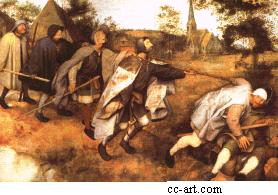
and bring in hither the poor, and the maimed, and the halt, and the blind.

Augustine wrote about the epistle:


"Whosoever is born of God doth not commit sin; for his seed remaineth in him: and he cannot sin, because he is born of God. In this the children of God are manifest, and the children of the devil: whosoever is not righteous is not of God, neither he that loveth not his brother. For this is the message that ye heard from the beginning, that we should love one another. Not as Cain, who was of the wicked one, and slew his brother. And wherefore slew he him? Because his own works were evil, and his brother's righteous. Marvel not, my brethren, if the world hate us. We know that we have passed from death unto life, because we love the brethren. He that loveth not abideth in death. Whosoever hateth his brother is a murderer: and ye know that no murderer hath eternal life abiding in him. In this we know love, that He laid down His life for us: and we ought to lay down our lives for the brethren. But whoso hath this world's good, and seeth his brother have need, and shutteth up his bowels of compassion from him, how can the love of God dwell in him? My little children, let us not love only in word and in tongue; but in deed and in truth."

1. Hear intently, I do beseech you, because it is no small matter that we have to cope withal: and I doubt not, because ye were intent upon it yesterday, that ye have with even greater intentness of purpose come together to-day. For it is no slight question, how he saith in this Epistle, "Whosoever is born of God, sinneth not," and how in the same Epistle he hath said above, "If we say that we have no sin, we deceive ourselves, and the truth is not in us." What shall the man do, who is pressed by both sayings out of the same Epistle? If he shall confess himself a sinner, he fears lest it be said to him, Then art thou not born of God; because it is written, "Whosoever is born of God, sinneth not." But if he shall say that he is just and that he hath no sin, he receives on the other side a blow from the same Epistle, "If we say that we have no sin, we deceive ourselves, and the truth is not in us." Placed then as he is in the midst, what he can say and what confess, or what profess, he cannot find. To profess himself to be without sin, is full of peril; and not only full of peril, but also full of error: "We deceive ourselves," saith he, "and the truth is not in us, if we say that we have no sin." But oh that thou hadst none, and saidst this! for then wouldest thou say truly, and in uttering the truth wouldest have not so much as a vestige of wrong to be afraid of. But, that thou doest ill if thou say so, is because it is a lie that thou sayest. "The truth," saith he, "is not in us, if we say that we have no sin." He saith not, "Have not had;" lest haply it should seem to be spoken of the past life. For the man here hath had sins: but from the time that he was born of God, he has begun not to have sins. If it were so, there would be no question to embarrass us. For we should say, We have been sinners, but now we are justified: we have had sin, but now we have none. He saith not this: but what saith he? "If we say that we have no sin, we deceive ourselves, and the truth is not in us." And then after a while he says on the other hand, "Whosoever is born of God sinneth not." Was John himself not born of God? If John was not born of God, John, of whom ye have heard that he lay in the Lord's bosom; does any man dare engage for himself that in him has taken place that regeneration which it was not granted to that man to have, to whom it was granted to lie in the bosom of the Lord? The man whom the Lord loved more than the rest, him alone had He not begotten of the Spirit?

2. Mark now these words. As yet, I am urging it upon you, what straits we are put to that by putting your minds on the stretch, that is, by your praying for us and for yourselves, God may make enlargement, and give us an outlet: lest some man find in His word an occasion of his own perdition, that word which was preached and put in writing only for healing and salvation. "Every man," saith he, "that doeth sin, doeth also iniquity." Lest haply thou make a distinction, "Sin is iniquity." Lest thou say, A sinner I am, but not a doer of iniquity, "Sin is iniquity. And ye know that to this end was He manifested, that He should take away sin; and there is no sin in Him." And what doth it profit us, that He came without sin? "Every one that sinneth not, abideth in Him: and every one that sinneth, hath not seen Him, neither known Him. Little children, let no man seduce you. He that doeth righteousness is righteous, even as He is righteous." This we have already said, that the word "as" is wont to be used of a certain resemblance, not of equality. "He that doeth sin is of the devil, because the devil sinneth from the beginning." This too we have already said, that the devil created no man, nor begat any, but his imitators are, as it were, born of him. "To this end was the Son of God manifested, that He should undo the works of the devil." Consequently, to undo (or loose) sins, He that hath no sin. And then follows: "Every one that is born of God doth not commit sin; for his seed remaineth in him: and he cannot sin, because he is born of God:" he has drawn the cord tight!—Belike, it is in regard of some one sin that he hath said, "Doth not sin," not in regard of all sin: that in this that he saith, "Whoso is born of God, doth not sin," thou mayest understand some one particular sin, which that man who is born of God cannot commit: and such is that sin that, if one commit it, it confirms the rest. What is this sin? To do contrary to the commandment. What is the commandment? "A new commandment give I unto you, that ye love one another." Mark well! This commandment of Christ is called, "love." By this love sins are loosed. If this love be not kept, the not holding it is at once a grievous sin, and the root of all sins.

Read it all at the link

Finis

--
Released by Primus Pilus
Legio Christi-Ecclesia Militans
"Let us therefore follow after the things which make for peace, and things wherewith one may edify another" [St. Paul's Epistle to the Romans 14:19]

* ORDO CENTURIONUM * IN HOC SIGNO VINCES * TIME DEUM ET OPERARE IUSTITIAM
2011/06/24

First Sunday after Trinity MMXI


O GOD, the strength of all those who put their trust in thee; Mercifully accept our prayers; and because, through the weakness of our mortal nature, we can do no good thing without thee, grant us the help of thy grace, that in keeping thy commandments we may please thee, both in will and deed; through Jesus Christ our Lord. Amen.

Source: Gregory's Sacramentum. The traditional numbering of Sundays was after Trinity Sunday in the Sarum Missal of England. The Gregorian Sacrementary of 600 numbered the Sunday after Trinity as the Second Sunday after Pentecost. Carnmer translated it as put their "trust" in thee in the first Prayer Book

Jeremiah xxiii. 23, Psalms 1, 5 | 2, 3, 4 , 1 St. John iv. 7   &   St. Luke xvi. 19

Homily


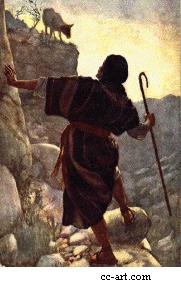
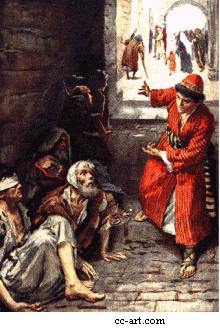
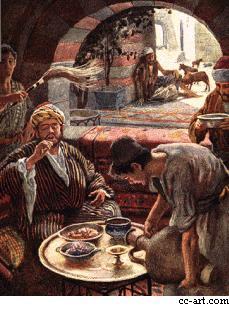
Lazarus and Dives

BELOVED, let us love one another: for love is of God; 
and every one that loveth is born of God, and knoweth God ... 
We are of God: he that knoweth God heareth us; 
he that is not of God heareth not us.


Augustine wrote


 "Now," saith he, "are ye of God little children, and have overcome him:" whom but Antichrist? For above he had said, "Whosoever unmaketh Jesus Christ and denieth that He is come in the flesh is not of God." Now we expounded, if ye remember, that all those who violate charity deny Jesus Christ to have come in the flesh. For Jesus had no need to come but because of charity: as indeed the charity we are commending is that which the Lord Himself commendeth in the Gospel, "Greater love than this can no man have, that a man lay down his life for his friends." How was it possible for the Son of God to lay down His life for us without putting on flesh in which He might die? Whosoever therefore violates charity, let him say what he will with his tongue, his life denies that Christ is come in the flesh; and this is an antichrist, wherever he may be, whithersoever he have come in. But what saith the apostle to them who are citizens of that country for which we sigh? "Ye have overcome him." And whereby have they overcome? "Because greater is He that is in you, than he that is in this world." Lest they should attribute the victory to their own strength, and by arrogance of pride should be overcome, (for whomsoever the devil makes proud, he overcomes,) wishing them to keep humility, what saith he? "Ye have overcome him." Every man now, at hearing this saying, "Ye have overcome," lifts up the head, lifts up the neck, wishes himself to be praised. Do not extol thyself; see who it is that in thee hath overcome. Why hast thou overcome? "Because greater is He that is in you, than he that is in the world." Be humble, bear thy Lord; be thou the beast for Him to sit on. Good is it for thee that He should rule, and He guide. For if thou have not Him to sit on thee, thou mayest lift up the neck, mayest strike out the heels: but woe to thee without a ruler, for this liberty sendeth thee among the wild beasts to be devoured!

Finis

--
Released by Primus Pilus
Legio Christi-Ecclesia Militans
"Let us therefore follow after the things which make for peace, and things wherewith one may edify another" [St. Paul's Epistle to the Romans 14:19]

* ORDO CENTURIONUM * IN HOC SIGNO VINCES * TIME DEUM ET OPERARE IUSTITIAM
2011/06/17

Trinity Sunday MMXI


ALMIGHTY and everlasting God, who hast given unto us thy servants grace, by the confession of a true faith, to acknowledge the glory of the eternal Trinity, and in the power of the Divine Majesty to worship the Unity; We beseech thee that thou wouldest keep us stedfast in this faith, and evermore defend us from all adversities, who livest and reignest, one God, world without end. Amen.

Numbers xxi. 4., Psalms 29, 33 | 93, 97, 150 ,   Revelation iv. 1   &   St. John iii. 1

Admonition and Exhortation for Communion

Homilies


"Verily I say unto thee, Except a man be born of water and of the Spirit, 
he cannot enter into the Kingdom of God."


Chrysostom wrote:

What then is the use of the water? This too I will tell you hereafter, when I reveal to you the hidden mystery. There are also other points of mystical teaching connected with the matter, but for the present I will mention to you one out of many. What is this one? In Baptism are fulfilled the pledges of our covenant with God; burial and death, resurrection and life; and these take place all at once. For when we immerse our heads in the water, the old man is buried as in a tomb below, and wholly sunk forever; then as we raise them again, the new man rises in its stead. As it is easy for us to dip and to lift our heads again, so it is easy for God to bury the old man, and to show forth the new. And this is done thrice, that you may learn that the power of the Father, the Son, and the Holy Ghost fulfilleth all this. To show that what we say is no conjecture, hear Paul saying, "We are buried with Him by Baptism into death": and again, "Our old man is crucified with Him": and again, "We have been planted together in the likeness of His death." ( Rom. vi. 4, 5, 6 .) And not only is Baptism called a "cross," but the "cross" is called "Baptism." "With the Baptism," saith Christ, "that I am baptized withal shall ye be baptized" ( Mark x. 39 ): 

Read it all at the link

(note: in the early church, and the Church of Chrysostom's era, baptism was administered normally on Easter, very early in the morning after a vigil. Candidates were completely naked and without any jewelry.  The candidate was questioned with the creed, as we have it in the Order, was anointed by a presbyter, was immersed three times, once in the name of the Father, once for the Son, and once for the Holy Ghost, and was then robed in a white tunic and presented to the bishop in the Church who confirmed him with the laying on of hands and anointing before first communion. See the historic service here: http://www.orderofcenturions.org/baptism.html )


Finis 


--
Released by Primus Pilus
Legio Christi-Ecclesia Militans
"Let us therefore follow after the things which make for peace, and things wherewith one may edify another" [St. Paul's Epistle to the Romans 14:19]

* ORDO CENTURIONUM * IN HOC SIGNO VINCES * TIME DEUM ET OPERARE IUSTITIAM
2011/06/10

Pentecost MMXI


O GOD, who as at this time didst teach the hearts of thy faithful people, by sending to them the light of thy Holy Spirit; Grant us by the same Spirit to have a right judgment in all things, and evermore to rejoice in his holy comfort; through the merits of Christ Jesus our Saviour, who liveth and reigneth with thee, in the unity of the same Spirit, one God, world without end. Amen.


Joel ii. 28, Psalm 68, Acts ii. 1. St. John xiv. 15. 
Homily

pentecost

We do hear them speak in our tongues the wonderful works of God


Chrysostom wrote,

So then the testimony comes from all quarters: from citizens, from foreigners, from proselytes. "We do hear them speak in our tongues the wonderful works of God." For it was not only that they spoke (in their tongues), but the things they spoke were wonderful. Well then might they be in doubt: for never had the like occurred. Observe the ingenuousness of these men. They were amazed and were in doubt, saying, "What meaneth this?" But "others mocking said, 'These men are full of new wine'" (John viii. 48), and therefore mocked. O the effrontery! And what wonder is it? Since even of the Lord Himself, when casting out devils, they said that He had a devil! For so it is; wherever impudent assurance exists, it has but one object in view, to speak at all hazards, it cares not what; not that the man should say something real and relevant to the matter of discourse, but that he should speak no matter what. ["They are full of new wine."] Quite a thing of course (is not it?), that men in the midst of such dangers, and dreading the worst, and in such despondency, have the courage to utter such things! And observe: since this was unlikely; because they would not have been drinking much [at that early hour], they ascribe the whole matter to the quality (of the wine), and say, "They are full" of it.

Read it all at the link


--
Released by Primus Pilus
Legio Christi-Ecclesia Militans
"Let us therefore follow after the things which make for peace, and things wherewith one may edify another" [St. Paul's Epistle to the Romans 14:19]

* ORDO CENTURIONUM * IN HOC SIGNO VINCES * TIME DEUM ET OPERARE IUSTITIAM

2011/05/28

The Fifth Sunday after Easter


Rogation Sunday

O LORD, from whom all good things do come; Grant to us thy humble servants, that by thy holy inspiration we may think those things that are good, and by thy merciful guiding may perform the same; through our Lord Jesus Christ. Amen.

Source: Sacramentary of Gelasius [ca 464 AD]. The collect refers to James 1:17 which is appointed for the 4th Sunday after Easter. Known as Rogation Sunday for the Latin "Rogare" means to ask, (earnestly petition), and the Gospel says, "ask, and ye shall receive." The three days following this Sunday are Rogation Days with prayer and fasting good crops and industry. This Sunday in latter times was also when folk in England would go out in procession around the parish boundaries and pray for protection.

Isaiah i. 10, Psalm 146, 147 | 132, 133, 134; St. James i. 22, St. John xvi. 23 

Homilies 

 
Whatsoever ye shall ask the Father in my name, he will give it you


 Augustin wrote on John,

We have now to consider these words of the Lord, "Verily, verily, I say unto you, If ye shall ask anything of the Father in my name, He will give it you." It has already been said in the earlier portions of this discourse of our Lord's, on account of those who ask some things of the Father in Christ's name and receive them not, that there is nothing asked of the Father in the Saviour's name that is asked in contrariety to the method of salvation. For it is not the sound of the letters and syllables, but what the sound itself imports, and what is rightly and truly to be understood by that sound, that He is to be regarded as declaring, when He says, "in my name." Hence, he who has such ideas of Christ as ought not to be entertained of the only Son of God, asketh not in His name, even though he may not abstain from the mention of Christ in so many letters and syllables; since it is only in His name he asketh, of whom he is thinking when he asketh. But he who has such ideas of Him as ought to be entertained, asketh in His name, and receiveth what he asketh, if he asketh nothing that is contrary to his own everlasting salvation. And he receiveth it when he ought to receive it. For some things are not refused, but are delayed till they can be given at a suitable time. In this way, surely, we are to understand His words, "He will give you," so that thereby we may know that those benefits are signified which are properly applicable to those who ask. For all the saints are heard effectively in their own behalf, but are not so heard in behalf of all besides, whether friends or enemies, or any others: for it is not said in a general kind of way, "He will give;" but, "He will give you."

See it all at the link

Finis

--
Released by Primus Pilus
Legio Christi-Ecclesia Militans
"Let us therefore follow after the things which make for peace, and things wherewith one may edify another" [St. Paul's Epistle to the Romans 14:19]

* ORDO CENTURIONUM * IN HOC SIGNO VINCES * TIME DEUM ET OPERARE IUSTITIAM
2011/05/21

The Fourth Sunday after Easter MMXI


ALMIGHTY God, which dost make the minds of all faithful men to be of one will; Grant unto thy people, that they may love the thing which thou commandest, and desire that which thou dost promise; that so, among the sundry and manifold changes of the world, our hearts may surely there be fixed, where true joys are to be found; through Jesus Christ our Lord. Amen.

Source of Collect: Sacrementary of Gelasius [ca 494 AD]. This is the 1552 BCP rendering. The collect was later changed in 1662 so that the attribute read, "who alone canst order the unruly wills and affections of sinful men", in response to the years before when the Church of England, Bishops, and Prayer Book had been suppressed under Cromwell.

Ezekiel xxxix. 21, Psalms 126, 127, 128 | 129, 130, 131; St. James i. 17. St. John xvi. 5. 
Homilies

By their community in supplying those unspeakable blessings, we may also fully learn their community in dignity. For that both the Son is able by himself to do that which in the case of baptism He is able to do with the Father, and the Holy Ghost the same..


Chrysostom on John xvi

"But why did not the Spirit come before He departed?" Because the curse not having yet been taken away, sin not yet loosed, but all being yet subject to vengeance, He could not come. "It is necessary then," saith He, "that the enmity be put away, that we be reconciled to God, and then receive that Gift." But why saith He, "I will send Him"? ( Ver. 7 .) It meaneth, "I will prepare you beforehand to receive Him." For, how can that which Is everywhere, be "sent"? Besides, He also showeth the distinction of the Persons. On these two accounts He thus speaketh; and also, since they were hardly to be drawn away from Himself, exhorting them to hold fast to the Spirit, and in order that they might cherish It. For He Himself was able to have wrought these things, but He concedeth to the Spirit the working of miracles, on this account, that they might understand His dignity. For as the Father could have brought into being things which are, yet the Son did so, that we might understand His power, so also is it in this case. On this account He Himself was made Flesh, reserving the inward working for the Spirit, shutting up the mouths of those who take the argument of His ineffable love for an occasion of impiety. For when they say that the Son was made flesh because He was inferior to the Father, we will reply to them, "what then will ye say of the Spirit?" He took not the flesh, and yet certainly on this account ye will not call Him greater than the Son, nor the Son inferior to Him. Therefore, in the case of baptism also the Trinity is included.

The Father is able to effect the whole, as is the Son, and the Holy Ghost; yet, since concerning the Father no man doubts, but the doubt was concerning the Son, and the Holy Ghost, They are included in the rite, that by Their community in supplying those unspeakable blessings, we may also fully learn Their community in dignity. For that both the Son is able by Himself to do that which in the case of baptism He is able to do with the Father, and the Holy Ghost the same, hear these things said plainly. For to the Jews He said, "That ye may know that the Son of Man hath power on earth to forgive sins" ( Mark ii. 10 ); and again, "That ye may become children of light" ( c. xii. 36 ): and, "I give to them eternal life." ( c. x. 28 .) Then after this, "That they might have life, and might have it more abundantly." ( c. x. 10 .) Now let us see the Spirit also performing the same thing. Where can we see it? "But the manifestation of the Spirit," it saith, "is given to every man to profit withal" ( 1 Cor. xii. 7; c. vi. 63 ); He then that giveth these things, much more remitteth sins. And again, "It is the Spirit that quickeneth"; and, "Shall quicken you by His Spirit which dwelleth in you" ( Rom. viii. 11 ); and, "The Spirit is Life because of righteousness" ( Rom. viii. 10 ); and, "If ye are led by the Spirit, ye are not under the Law." ( Gal. v. 18 .) "For ye have not received the Spirit of bondage again to fear, but ye have received the Spirit of adoption." ( Rom. viii. 15 .) All the wonders too which they then wrought, they wrought at the coming of the Spirit. And Paul writing to the Corinthians, said, "But ye have been washed, but ye have been sanctified in the name of our Lord Jesus Christ, and by the Spirit of our God." ( 1 Cor. vi. 11 .)

Read it all at the link

Finis

--
Released by Primus Pilus
Legio Christi-Ecclesia Militans
"Let us therefore follow after the things which make for peace, and things wherewith one may edify another" [St. Paul's Epistle to the Romans 14:19]

* ORDO CENTURIONUM * IN HOC SIGNO VINCES * TIME DEUM ET OPERARE IUSTITIAM
2011/05/13

The Third Sunday after Easter MMXI


ALMIGHTY God, who showest to them that are in error the light of thy truth, to the intent that they may return into the way of righteousness; Grant unto all those who are admitted into the fellowship of Christ's Religion, that they may avoid those things that are contrary to their profession, and follow all such things as are agreeable to the same; through our Lord Jesus Christ. Amen.

Source of Collect: Sacramentary of Leo, Bishop of Rome [440-461AD]. The Vigil of Easter was the traditional time for Baptism, and this collect speaks to the newly baptized "all those who are admitted into the fellowship". One had to be baptized to be present during the Eucharist. Christiana professione censentor

1 Samuel ii. 1b, Psalm 120, 121, 122 | 123, 124, 125; 1 St. Peter ii. 11. St. John xvi. 16.

Homilies

 
"These things have I spoken unto you in proverbs, 
but the time cometh when I shall no more speak unto you in proverbs."

 John Chrysostom on John xvi. 16ff wrote

"There shall be a time when ye shall know all things clearly." He speaketh of the time of the Resurrection. "Then," "I shall tell you plainly of the Father." (For He was with them, and talked with them forty days, being assembled with them, and speaking of the things concerning the kingdom of God- Acts i. 3, 4 ,)-"because now being in fear, ye give no heed to My words; but then when ye see Me risen again, and converse with Me, ye will be able to learn all things plainly, for the Father Himself will love you, when your faith in Me hath been made firm."


--
Released by Primus Pilus
Legio Christi-Ecclesia Militans
"Let us therefore follow after the things which make for peace, and things wherewith one may edify another" [St. Paul's Epistle to the Romans 14:19]

* ORDO CENTURIONUM * IN HOC SIGNO VINCES * TIME DEUM ET OPERARE IUSTITIAM
2011/05/07

The Second Sunday after Easter MMXI


ALMIGHTY God, who hast given thine only Son to be unto us both a sacrifice for sin, and also an ensample of godly life; Give us grace that we may always most thankfully receive that his inestimable benefit, and also daily endeavour ourselves to follow the blessed steps of his most holy life; through the same thy Son Jesus Christ our Lord. Amen.


Isaih xl. 1, Psalm 21, 23 | 116, 117; 1 St. Peter ii. 19. St. John x. 11. 

Homilies 

"Verily, verily, I say unto you, he that entereth not by the door into the sheepfold, 

but climbeth up some other way, the same is a thief and a robber."


Chrysostom wrote:

Observe the marks of a robber; first, that he doth not enter openly; secondly, not according to the Scriptures, for this is the, "not by the door." Here also He referreth to those who had been before, and to those who should be after Him, Antichrist and the false Christs, Judas and Theudas, and whatever others there have been of the same kind. And with good cause He calleth the Scriptures "a door," for they bring us to God, and open to us the knowledge of God, they make the sheep, they guard them, and suffer not the wolves to come in after them. For Scripture, like some sure door, barreth the passage against the heretics, placing us in a state of safety as to all that we desire, and not allowing us to wander; and if we undo it not, we shall not easily be conquered by our foes. By it we can know all, both those who are, and those who are not, shepherds. But what is "into the fold"? It refers to the sheep, and the care of them. For he that useth not the Scriptures, but "climbeth up some other way," that is, who cutteth out for himself another and an unusual way, "the same is a thief." Seest thou from this too that Christ agreeth with the Father, in that He bringeth forward the Scriptures? On which account also He said to the Jews, "Search the Scriptures" ( c. v. 39 ); and brought forward Moses, and called him and all the Prophets witnesses, for "all," saith He, "who hear the Prophets shall come to Me"; and, "Had ye believed Moses, ye would have believed Me." But here He hath put the same thing metaphorically. And by saying, "climbeth up some other way," He alluded to the Scribes, because they taught for commandments the doctrines of men, and transgressed the Law ( Matt. xv. 9 ); with which He reproached them, and said, "None of you doeth the Law." ( c. vii. 19 .) Well did He say, "climbeth up," not "entereth in," since to climb is the act of a thief intending to overleap a wall, and who doeth all with danger. Hast thou seen how He hath sketched the robber? now observe the character of the shepherd. What then is it?

FINIS

--
Released by Primus Pilus
Legio Christi-Ecclesia Militans
"Let us therefore follow after the things which make for peace, and things wherewith one may edify another" [St. Paul's Epistle to the Romans 14:19]

* ORDO CENTURIONUM * IN HOC SIGNO VINCES * TIME DEUM ET OPERARE IUSTITIAM
2011/04/30

The First Sunday after Easter MMXI

ALMIGHTY Father, who hast given thine only Son to die for our sins, and to rise again for our justification; Grant us so to put away the leaven of malice and wickedness, that we may always serve thee in pureness of living and truth; through the merits of the same thy Son Jesus Christ our Lord. Amen.

1 St. John v. 4.; Psalms 110, 111 | 2, 57; John xx19

Homilies


 He breathed on them, and said, Receive ye the Holy Ghost.
 Whosesoever sins ye remit, they are remitted unto them, 
and whosesoever sins ye retain, they are retained.


Chrysostom wrote, 

As a king sending forth governors, gives power to cast into prison and to deliver from it, so in sending these forth, Christ investeth them with the same power. But how saith He, "If I go not away, He will not come" ( c. xvi. 7 ), and yet giveth them the Spirit? Some say that He gave not the Spirit, but rendered them fit to receive It, by breathing on them. For if Daniel when he saw an Angel was afraid, what would not they have suffered when they received that unspeakable Gift, unless He had first made them learners? Wherefore He said not, "Ye have received the Holy Ghost," but, "Receive ye the Holy Ghost." Yet one will not be wrong in asserting that they then also received some spiritual power and grace; not so as to raise the dead, or to work miracles, but so as to remit sins. For the gifts of the Spirit are of different kinds; wherefore He added, "Whosesoever sins ye remit, they are remitted unto them," showing what kind of power He was giving. But in the other case, after forty days, they received the power of working miracles. Wherefore He saith, "Ye shall receive power, after that the Holy Ghost is come upon you, and ye shall be My witnesses both in Jerusalem, and in all Judæa." ( Acts i. 8 .) And witnesses they became by means of miracles, for unspeakable is the grace of the Spirit and multiform the gift. But this comes to pass, that thou mayest learn that the gift and the power of the Father, the Son, and the Holy Ghost, is One. For things which appear to be peculiar to the Father, these are seen also to belong to the Son, and to the Holy Ghost. "How then," saith some one, "doth none come to the Son, 'except the Father draw him'?" ( c. vi. 44 .) Why, this very thing is shown to belong to the Son also. "I," He saith, "am the Way: no man cometh unto the Father but by Me." ( c. xiv. 6 .) And observe that it belongeth to the Spirit also; for "No man can call Jesus Christ Lord, but by the Holy Ghost." ( 1 Cor. xii. 3 .) Again, we see that the Apostles were given to the Church at one time by the Father, at another by the Son, at another by the Holy Ghost, and that the "diversities of gifts" ( 1 Cor. xii. 4 ) belong to the Father, the Son, and the Holy Ghost.

 Let us then do all we can to have the Holy Spirit with ourselves, and let us treat with much honor those into whose hands its operation hath been committed. For great is the dignity of the priests. "Whosesoever sins," it saith, "ye remit, they are remitted unto them"; wherefore also Paul saith, "Obey them that have the rule over you, and submit yourselves." ( Heb. xiii. 17 .) And hold them very exceedingly in honor; for thou indeed carest about thine own affairs, and if thou orderest them well, thou givest no account for others, but the priest even if he rightly order his own life, if he have not an anxious care for thine, yea and that of all those around him, will depart with the wicked into hell; and often when not betrayed by his own conduct, he perishes by yours, if he have not rightly performed all his part. Knowing therefore the greatness of the danger, give them a large share of your goodwill; which Paul also implied when he said, "For they watch for your souls," and not simply so, but, "as they that shall give account." ( Heb. xiii. 17 .) They ought therefore to receive great attention from you; but if you join with the rest in trampling upon them, then neither shall your affairs be in a good condition. For while the steersman continues in good courage, the crew also will be in safety; but if he be tired out by their reviling him and showing ill-will against him, he cannot watch equally well, or retain his skill, and without intending it, throws them into ten thousand mischiefs. And so too the priest, if he enjoy honor from you, will be able well to order your affairs; but if ye throw them into despondency, ye weaken their hands, and render them, as well as yourselves, an easy prey to the waves, although they be very courageous.

(Comment: I would add that one should not honor blindly. As for for those heretics of the Word, put them far from you; for in this day we find many organized churches fail to discipline their ministers when they stray and lead their flock into significant scriptural error, or worse.)

Read it all at the link above

Finis


--
Released by Primus Pilus-Sabbatical
Legio Christi-Ecclesia Militans
"Let us therefore follow after the things which make for peace, and things wherewith one may edify another" [St. Paul's Epistle to the Romans 14:19]

* ORDO CENTURIONUM * IN HOC SIGNO VINCES * TIME DEUM ET OPERARE IUSTITIAM
2011/04/23

Easter Day MMXI


ALMIGHTY God, who through thine only-begotten Son Jesus Christ hast overcome death, and opened unto us the gate of everlasting life; We humbly beseech thee that, as by thy special grace preventing us thou dost put into our minds good desires, so by thy continual help we may bring the same to good effect; through the same Jesus Christ our Lord, who liveth and reigneth with thee and the Holy Ghost ever, one God, world without end. Amen.

Source of Collect: Sacramentary of Gelasius [ca 494 AD]. This was changed to reflect the church's fight against the teachings of Pelagain, an monk who traveled and essentially taught that people could do good without God's help.

Isaiah xxv. 1-9, Psalm 2, 57, 111 | 113, 116, 117, Colossians iii. 1. St. John xx. 1.
Homilies


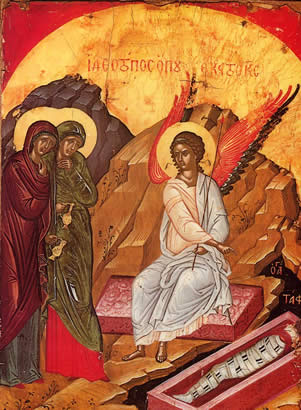
They have taken away the Lord out of the sepulcher, 
and we know not where they have laid him. 


Ver. 2 . "They have taken away," she saith, "my Lord, and I know not where they have laid Him." Seest thou how she knew not as yet anything clearly concerning the Resurrection, but thought there had been a removal of the body, and tells all simply to the disciples? And the Evangelist hath not deprived the woman of such a praise, nor thought it shame that they should have learnt these things first from her who had passed the night in watching. Thus everywhere doth the truth-loving nature of his disposition shine forth. When then she came and said these things, they hearing them, draw near with great eagerness to the sepulcher, and see the linen clothes lying, which was a sign of the Resurrection. For neither, if any persons had removed the body, would they before doing so have stripped it; nor if any had stolen it, would they have taken the trouble to remove the napkin, and roll it up, and lay it in a place by itself; but how? they would have taken the body as it was. On this account John tells us by anticipation that it was buried with much myrrh, which glues linen to the body not less firmly than lead; in order that when thou hearest that the napkins lay apart, thou mayest not endure those who say that He was stolen. For a thief would not have been so foolish as to spend so much trouble on a superfluous matter. For why should he undo the clothes? and how could he have escaped detection if he had done so? 


Read it all at the link


Finis

HOME
--
Released by Primus Pilus-Sabbatical
Legio Christi-Ecclesia Militans
"Let us therefore follow after the things which make for peace, and things wherewith one may edify another" [St. Paul's Epistle to the Romans 14:19]

* ORDO CENTURIONUM * IN HOC SIGNO VINCES * TIME DEUM ET OPERARE IUSTITIAM
2011/04/16

The Sunday next before Easter - Palm Sunday


ALMIGHTY and everlasting God, who, of thy tender love towards mankind, hast sent thy Son, our Saviour Jesus Christ, to take upon him our flesh, and to suffer death upon the cross, that all mankind should follow the example of his great humility; Mercifully grant, that we may both follow the example of his patience, and also be made partakers of his resurrection; through the same Jesus Christ our Lord. Amen.

Source: Sacramentary of Galesius, Bishop of Rome [494 AD]. "Palms" were carried by people on this Sunday in remembrance of Jesus' entrance into Jerusalem.

Zechariah ix. 9, Psalm 97, 110 | 22, 23 , Philippians ii. 5.     St. Matthew xxvii. 1. 
Homilies

when he was accused of the chief priests and elders, 
he answered nothing


 John Chrysostom wrote,

"And Jesus stood before the governor; and the governor asked Him, saying, Art thou the king of the Jews? And Jesus said unto him, Thou sayest. And when He was accused of the chief priests and elders, He answered nothing."

Wherefore then did he not bring forward these things, it may be said, at that time, when accused of usurpation? Because having the proofs from His acts, of His power, His meekness, His gentleness, beyond number, they were willfully blind, and dealt unfairly, and the tribunal was corrupt. For these reasons then He replies to nothing, but holds His peace, yet answering briefly (so as not to get the reputation of arrogance from continual silence) when the high priest adjured Him, when the governor asked, but in reply to their accusations He no longer saith anything; for He was not now likely to persuade them. Even as the prophet declaring this self-same thing from of old, said, "In His humiliation His judgment was taken away."

At these things the governor marvelled, and indeed it was worthy of admiration to see Him showing such great forbearance, and holding His peace, Him that had countless things to say. For neither did they accuse Him from knowing of any evil thing in Him, but from jealousy and envy only. At least when they had set false witness, wherefore, having nothing to say, did they still urge their point? and when they saw Judas was dead, and that Pilate had washed his hands of it, why were they not pricked with remorse. For indeed He did many things even at the very time, that they might recover themselves, but by none were they amended.

Read it all at the link

--
Released by Primus Pilus-Sabbatical
Legio Christi-Ecclesia Militans
"Let us therefore follow after the things which make for peace, and things wherewith one may edify another" [St. Paul's Epistle to the Romans 14:19]

* ORDO CENTURIONUM * IN HOC SIGNO VINCES * TIME DEUM
ET OPERARE IUSTITIAM
2011/04/08

The Fifth Sunday in Lent MMXI


WE beseech thee, Almighty God, mercifully to look upon thy people; that by thy great goodness they may be governed and preserved evermore, both in body and soul; through Jesus Christ our Lord. Amen. 

Source: Sacramentary of Gregory, Bishop of Rome [600 AD]. The "people" in this translation is familia in Latin. "Passion" for Passion Sunday had its roots in Medieval times 


Isaiah i. 10, Psalm 42, 43 | 119:145–176 , Hebrews ix. 11, St. John viii. 46.
Homilies

Which of you convinceth me of sin?


Gregory
Homily on the Gospel 


DEARLY beloved brethren, consider the gentleness of God. He came to take away sin, and he saith: Which of you convinceth me of sin? He, who in virtue of his Godhead was able to justify sinners, did not disdain to shew by an appeal to reason that he was not himself a sinner. But verily the words which he addeth are exceeding awesome: He that is of God heareth God's words; ye, therefore, hear them not, because ye are not of God. Wherefore, if he that is of God, heareth God's words, and if one who is not of God, is not able to hear God's words, let each one ask himself: Do I, in the ear of my heart, hear God's words, and understand whose words they are? The Truth commandeth us to long for a fatherland in heaven, to bridle the lusts of the flesh, to turn away from the glory of the world, to covet no man's goods, and to bestow freely of our own.

Read it all at the link

--
Released by Primus Pilus-Sabbatical
Legio Christi-Ecclesia Militans
"Let us therefore follow after the things which make for peace, and things wherewith one may edify another" [St. Paul's Epistle to the Romans 14:19]

* ORDO CENTURIONUM * IN HOC SIGNO VINCES * TIME DEUM ET OPERARE IUSTITIAM
2011/04/01

The Fourth Sunday in Lent MMXI


GRANT, we beseech thee, Almighty God, that we, who for our evil deeds do worthily deserve to be punished, by the comfort of thy grace may mercifully be relieved; through our Lord and Saviour Jesus Christ. Amen.

Source: Sacramentary of Gregory, Bishop of Rome [600 AD]. This Sunday was sometimes known as "Refreshmefnt Sunday" for "be relieved" from the Latin resperimus and the Gospel where Jesus relieved the multitude of their hunger. Sometimes known as "Mothering Sunday" as Paul says in the Gospel, "the Jerusalem above is the mother of us all"


Ezekiel xxxix. 21,   Psalm 142, 143 | 119:105–144   Galatians iv. 21. St. John vi. 1. 
Homilies

There is a lad here, which hath five barley loaves, and two small fishes: but what are they among so many?

 Augustine wrote


The miracles wrought by our Lord Jesus Christ were verily divine works, and they stir up the mind of man to rise by a perception of what is seen by the eye unto an apprehension of God himself. For God is of such substance as eye cannot see, and the many miracles which he doth work in his continual rule of the whole universe, and in his providential care of everything which he hath made, are by use become so common that scarce anyone permitteth himself to perceive the same, as for example, what wondrous and amazing works of God there be in every grain of seed. Wherefore his mercy hath constrained him to keep some works to be done only at some convenient time, as it were, out of the common course and order of nature, to the intent that men may see them and wonder, not because they be greater, but because they be rarer, than those which they so lightly esteem by reason of their daily occurrence. 

I wonder what he would say concerning DNA, wherein our biological being is mapped at conception, for life.... maybe he would have quoted some scripture to show this is nothing new: something like this: "My substance was not hid from thee, when I was made in secret, and curiously wrought in the lowest parts of the earth. Thine eyes did see my substance, yet being unperfect; and in thy book all my members were written, which in continuance were fashioned, when as yet there was none of them." [Ps 139]  Surely one of his most common but most wonderful miracles.

Read it all at the link

Finis

--
Released by Primus Pilus
Legio Christi-Ecclesia Militans
"Let us therefore follow after the things which make for peace, and things wherewith one may edify another" [St. Paul's Epistle to the Romans 14:19]

* ORDO CENTURIONUM * IN HOC SIGNO VINCES * TIME DEUM ET OPERARE IUSTITIAM
2011/03/25

The Third Sunday in Lent MMXI


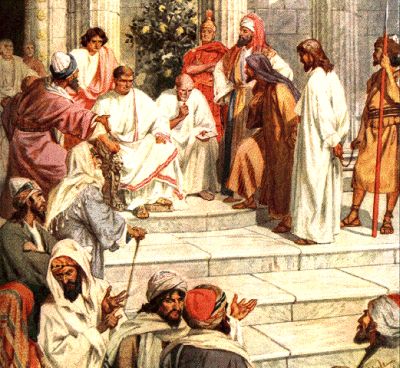
WE beseech thee, Almighty God, look upon the hearty desires of thy humble servants, and stretch forth the right hand of thy Majesty, to be our defence against all our enemies; through Jesus Christ our Lord. Amen.

Source: Saramentary of Gregory, Bishop of Rome [600 AD] In the Gospel today Jesus heals a man possesed, stretching forth his hand


Deut vi.,   Psalm 56, 86 | 119:73–104 ,   Ephesians v. 1. St. Luke xi. 14.

Homilies

Blessed are they that hear the word of God, and keep it.


Chrysostom on the Epistle...

Ver. 3. "But fornication, and all uncleanness or covetousness, let it not even be named among you, as becometh saints."

He has spoken of the bitter passion, of wrath; he now comes to the lesser evil: for that lust is the lesser evil, hear how Moses also in the law says, first, "Thou shalt do no murder" (Ex. xx. 13.), which is the work of wrath, and then, "Thou shalt not commit adultery" (Ex. xx. 14.), which is of lust. For as "bitterness," and "clamor," and "all malice," and "railing," and the like, are the works of the passionate man, so likewise are "fornication, uncleanness, covetousness," those of the lustful; since avarice and sensuality spring from the same passion.

But just as in the former case he took away "clamor" as being the vehicle of "anger," so now does he "filthy talking" and "jesting" as being the vehicle of lust; for he proceeds,

Ver. 4. "Nor filthiness, nor foolish talking, or jesting, which are not befitting; but rather giving of thanks."

Have no witticisms, no obscenities, either in word or in deed, and thou wilt quench the flame-"let them not even be named," saith he, "among you," that is, let them not anywhere even make their appearance. This he says also in writing to the Corinthians. "It is actually reported that there is fornication among you" (1 Cor. v. 1.); as much as to say, Be ye all pure. For words are the way to acts. Then, that he may not appear a forbidding kind of person and austere, and a destroyer of playfulness, he goes on to add the reason, by saying, "which are not befitting," which have nothing to do with us-"but rather giving of thanks." What good is there in uttering a witticism? thou only raisest a laugh. Tell me, will the shoemaker ever busy himself about anything which does not belong to or befit his trade? or will he purchase any tool of that kind? No, never. Because the things we do not need, are nothing to us.


Read the moral at the link as presented by Chrysostom


--
Released by Primus Pilus-Sabbtical
Legio Christi-Ecclesia Militans
"Let us therefore follow after the things which make for peace, and things wherewith one may edify another" [St. Paul's Epistle to the Romans 14:19]

* ORDO CENTURIONUM * IN HOC SIGNO VINCES * TIME DEUM ET OPERARE IUSTITIAM
2011/03/19

The Second Sunday in Lent MMXI


ALMIGHTY God, who seest that we have no power of ourselves to help ourselves; Keep us both outwardly in our bodies, and inwardly in our souls; that we may be defended from all adversities which may happen to the body, and from all evil thoughts which may assault and hurt the soul; through Jesus Christ our Lord. Amen.

Source: Sacrementary of Gregory - Bishop of Rome. [600 AD] The petition is not only for assualts from without, but also from within.

1 Kings viii. 37 Psalm 6, 38 | 119:33–72   1 Thessalonians iv. 1. & St. Matthew xv. 21 

Homilies


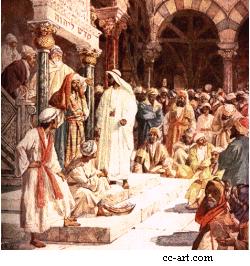
And her daughter was made whole from that very hour


Chrysostom wrote:

The evangelist speaks against the woman, that he may show forth her marvellous act, and celebrate her praise the more. For when thou hearest of a Canaanitish woman, thou shouldest call to mind those wicked nations, who overset from their foundations the very laws of nature. And being reminded of these, consider also the power of Christ's advent. For they who were cast out, that they might not pervert any Jews, these appeared so much better disposed than the Jews, as even to come out of their coasts, and approach Christ; while those were driving Him away, even on His coming unto them. Having then come unto Him, she saith nothing else, but "Have mercy on me," and by her cry brings about them many spectators. For indeed it was a pitiful spectacle to see a woman crying aloud in so great affliction, and that woman a mother, and entreating for a daughter, and for a daughter in such evil case: she not even venturing to bring into the Master's sight her that was possessed, but leaving her to lie at home, and herself making the entreaty. And she tells her affliction only, and adds nothing more; neither doth she drag the physician to her house, like that nobleman, saying, "Come and lay thy hand upon her," and, "Come down ere my child die." But having described both her calamity, and the intensity of the disease, she pleads the Lord's mercy, and cries aloud; and she saith not, "Have mercy on my daughter," but, "Have mercy on me." For she indeed is insensible of her disease, but it is I that suffer her innumerable woes; my disease is with consciousness, my madness with perception of itself.

A mother's love, a mother's hope.

Read it all at the link.

Finis
--
Released by Primus Pilus-Sabbatical
Legio Christi-Ecclesia Militans
"Let us therefore follow after the things which make for peace, and things wherewith one may edify another" [St. Paul's Epistle to the Romans 14:19]

* ORDO CENTURIONUM * IN HOC SIGNO VINCES * TIME DEUM ET OPERARE IUSTITIAM
2011/03/12

The First Sunday in Lent MMXI


Quadregesima 

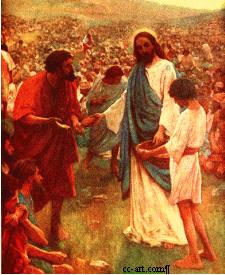
O LORD, who for our sake didst fast forty days and forty nights; Give us grace to use such abstinence, that, our flesh being subdued to the Spirit we may ever obey thy godly motions in righteousness, and true holiness, to thy honour and glory, who livest and reignest with the Father and the Holy Ghost, one God, world without end. Amen. 

This homily was traditionally said on Quardragesima... another name of this Sunday, which marked the start of Lent, as it was about forty days before easter.

Admonition and Exhortation for Communion

Isaiah 58   Psalm 51, 54 | 119:1–32   2 Corinthians vi. 1   &   St. Matthew iv. 1

Homiles

It is written, Man shall not live by bread alone, 
but by every word that proceedeth out of the mouth of God


Chrysostom wrote,

For the devil would not have assailed thee, unless he had seen thee brought to greater honor. Hence, for example, from the beginning, he attacked Adam, because he saw him in the enjoyment of great dignity. For this reason he arrayed himself against Job, because he saw him crowned and proclaimed by the God of all.

Read it all at the link.

--
Released by Primus Pilus
Legio Christi-Ecclesia Militans
"Let us therefore follow after the things which make for peace, and things wherewith one may edify another" [St. Paul's Epistle to the Romans 14:19]

* ORDO CENTURIONUM * IN HOC SIGNO VINCES * TIME DEUM ET OPERARE IUSTITIAM
2011/03/04

The Sunday called Quinquagesima


the Sunday before Lent 

O LORD which dost teach us that all our doings without charity are nothing worth; Send thy Holy Ghost, and pour into our hearts that most excellent gift of charity, the very bond of peace and of all virtues, without which whosoever liveth is counted dead before thee. Grant this for thine only Son Jesus Christ's sake. Amen.

Quinquagesima is about 50 days before Easter. Source, Bishop Thomas Cranmer [1549]. Reflects 1 Cor 13 on Charity. Replaced a Mideival prayer used on Shrove Tuesday, when penitients were shriven, that is absolved, of their sins

Deut x. 12   Psalm 15, 16 | 111, 112;   1 Corinthians xiii. 1.   &   St. Luke xviii. 31
Homilies

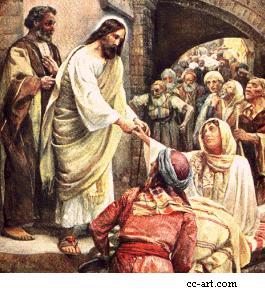
Thou son of David, have mercy on me


Chrysostom wrote, 

"let us keep to the things set before us, and let us listen to these blind men, who were better than many that see. For neither having a guide, nor being able to see Him when come near to them, nevertheless they strove to come unto Him, and began to cry with a loud voice, and when rebuked for speaking, they cried the more. For such is the nature of an enduring soul, by the very things that hinder, it is borne up."

Read it all at the link
Finis